
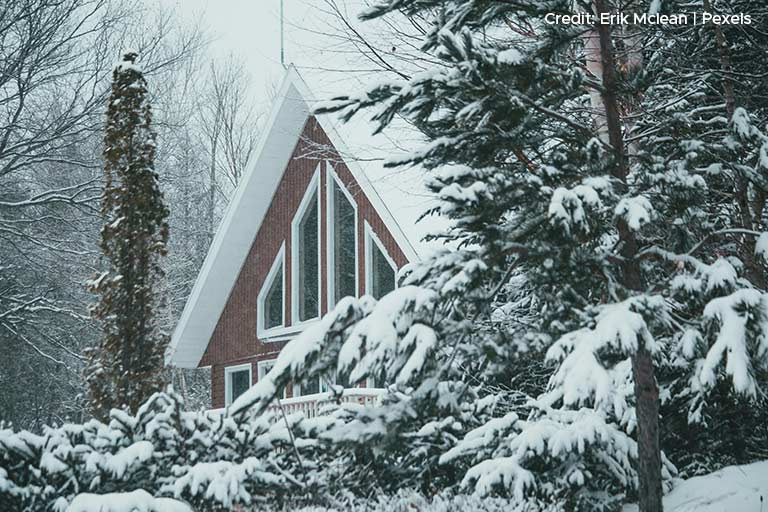
If you’ve ever peeked out the window in winter, the landscape might appear peaceful and still to your eyes. The garden is dormant, and the massive shade trees that protected your home from the summer heat now stand like so many silent sentinels, stripped of their leaves. It is easy to assume that because trees are dormant, they are immune to the environment until spring returns; after all, they’re practically asleep and won’t feel a thing until the world thaws. However, dormancy is not invincibility. While your trees are resting, they are actually facing a barrage of environmental stressors that can cause significant, lasting damage.
For homeowners, the winter season presents a unique set of challenges for arboriculture. These issues your trees face are very often stealthy; the damage occurs silently in January or February, but you may not notice it yourself until the tree attempts to leaf out in May. Understanding these hidden threats is the first line of defence in preserving the health and longevity of your landscape, especially if you’re in the habit of providing some pre-winter tree care in the fall.
1. Sunscald (Southwest Injury)
One of the most deceptive winter dangers comes from the sun itself. On bright, crisp winter days, the sun is positioned low in the sky. This angle allows intense sunlight to strike the south and southwest sides of tree trunks.
The dark bark absorbs this heat, causing the dormant cells beneath the surface to wake up and become active. When the sun sets and temperatures plummet rapidly (they can often drop below zero degrees Celsius in a matter of hours) these active cells freeze and die. What happens to your tree is that it can end with vertical, sunken, or cracked patches of bark. This is particularly common in thin-barked species like Maples and fruit trees.
2. Desiccation (Winter Drying)
It’s easy to associate dehydration with summer and the lack of water. And while years with above average precipitation like this one are welcome, (especially for drought-prone areas), winter is an incredibly dry season in spite of all the water supposedly frozen everywhere. The air holds very little moisture, and winter winds act like a blow dryer, stripping moisture from any remaining foliage (in the case of conifers) and from the twigs of deciduous trees.
What exacerbates the problem is the ground being frozen solid. The tree’s root system is locked in ice and cannot draw up water to replace what is being lost to the wind. This creates a severe moisture deficit within the tree. By spring, this manifests as winter burn, which can turn evergreen needles a rust colour, and deciduous branches brittle.
3. Salt Damage
In an effort to keep driveways and sidewalks ice-free and safe, it’s common to use de-icing salts. Unfortunately, the sodium chloride that’s usually used for de-icing is toxic to most shade trees; using that too closely around trees is a common tree care mistake many homeowners make. There are two ways this hidden danger attacks.
First, vehicles driving through slush can create a salty spray that coats the buds and branches of nearby trees, which then chemically burns the tissues. Second, and perhaps more insidious, is soil contamination. As snow melts, salt-laden water soaks into the soil profile. The salt binds to soil particles and displaces essential nutrients. Furthermore, high salt concentrations in the soil absorb water so aggressively that the tree roots cannot take it up, leading to a phenomenon known as physiological drought. In this case, the tree is thirsty, but the water is unavailable.
4. Rodent Girdling
A heavy blanket of snow provides excellent insulation for the ground, but it also creates a hidden highway system for rodents, particularly voles and mice. Safe from predators under 30 or 40 centimetres of snow, these animals scavenge for food.
The tender bark at the base of young shade trees is a prime target. These rodents can chew all the way around the trunk, a process known as “girdling.” The bark conveys nutrients from the leaves to the roots; if this connection is severed completely around the circumference, the tree will starve and likely die before summer. This damage is often completely hidden until the snow melts in the spring.
5. Frost Cracks
You may have occasionally heard a loud, sharp crack echo through the woods on a violently cold night. This is the sound of trees reacting to thermal tension. Wood contains moisture, and when temperatures drop severely, the wood contracts.
Because the outer layers of the trunk cool and contract faster than the insulated inner heartwood, immense tension builds up. Eventually, the pressure is released in the form of a vertical crack splitting the trunk. While trees can often seal these wounds over time, the cracks can reopen in subsequent winters and provide an entry point for decay, fungi, and insects.
6. Structural Failure from Ice Loading
While snow generally looks fluffy, ice is heavy. A 1 and a half centimetre coating of ice can actually increase the weight of a branch by hundreds of kilograms. Shade trees with poor structural architecture, such as those with co-dominant stems (i.e. with two main trunks growing in a V-shape) are at high risk.
The hidden danger here is often previous neglect. A weak branch union may hold up fine during a summer storm, but the sustained, static load of ice may add enough strain to cause the wood fibres to shear. This often results in catastrophic failure where large portions of the canopy tear away, leaving a jagged wound that is difficult for the tree to compartmentalize. All the more reason to give your tree the maintenance it deserves all year round.
Winter may feel like a season where everything is still and passive, but it isn’t always and isn’t always applicable to everything. It’s certainly not a passive time for your trees when they’re enduring until spring. By recognizing that there are threats that can affect your trees, you can take a more proactive approach to your landscape maintenance. Simple adjustments, such as using burlap wraps, applying non-sodium de-icers, or installing tree guards, can mitigate many of these risks, and give your trees a little help making it through the winter safely.
When you need trees to shade your home and offer some privacy, Caledon Treeland has what you need. Our tree farm provides a wide range of tree species to meet our clients’ needs and environment. Give us a call now at (905) 880-1828 and make an appointment to see our tree farm for yourself.