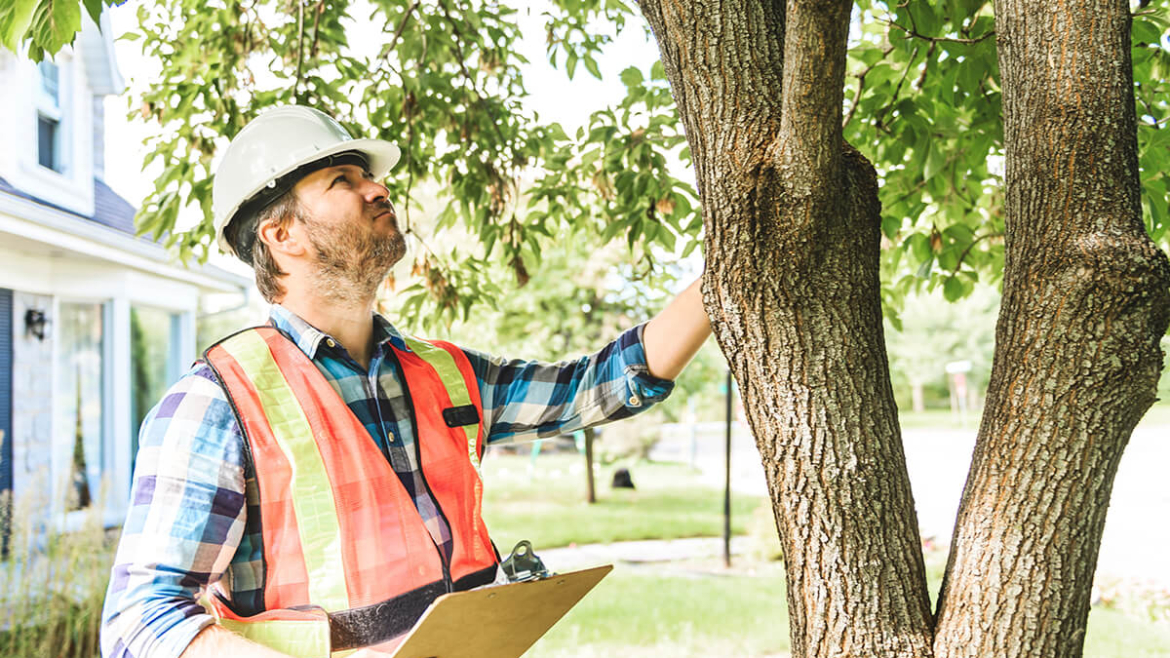
It’s easy to take your trees for granted, especially when you consider how tough they seem to be. A mature tree can stand for years, then suddenly drop a limb as wide as your arm in a single summer storm. While these failures might catch many homeowners by surprise, the truth is that they aren’t sudden surprises. The signs are there, if you know how to look, and a tree that’s in danger of failing can show those signs for months or years before failure occurs. The good news is that these signs are usually visible from ground level, and so the tricky part is knowing what to look for. A little goes a long way toward keeping your tree healthy; all you need is a guide to providing that proactive tree care in the first place.
Take a quick walk around your property and give your trees a checkup at least twice a year. And as you go, ask yourself the following questions to help assess how healthy your tree’s limbs really are before anything happens.
1. Is the Limb Bare, Brittle, or Featuring Shriveled Leaves?
When the tree is in full leaf, take the time to compare the branch to the rest of the canopy. Any limbs with no foliage, or ones with dry brown leaves while everything around it is green are immediately visible. These signs indicate that that particular branch has lost its water supply and is dead. Dead wood turns brittle and eventually snaps at the attachment point, and so that dead limb needs removal immediately.
2. Are there Cracks or Splits Where the Limb Meets the Trunk?
Study the swollen ring of tissue at the base of the branch. A vertical crack, a seam of separated bark, or a gap large enough to slip a coin into means the connection is already coming apart and the limb is in danger of falling. Any splits that open and close as the tree sways are particular issues that demand attention right away. Knowing some bark first aid goes a long way to managing the issue and giving your tree some immediate help.
3. Does the Union Form a Narrow V Instead of a Broad U?
Limbs rising at a tight angle to the trunk often trap bark inside the join instead of solid wood. These attachments look sturdy but actually hold very little strength, and they are among the most common failure points on maples, elms, and ornamental pears. For reference, a wide union with a raised collar (one that forms more of a ‘U’ shape) is far more secure.
4. Do You See Mushrooms, Conks, or Shelf Fungi on the Wood?
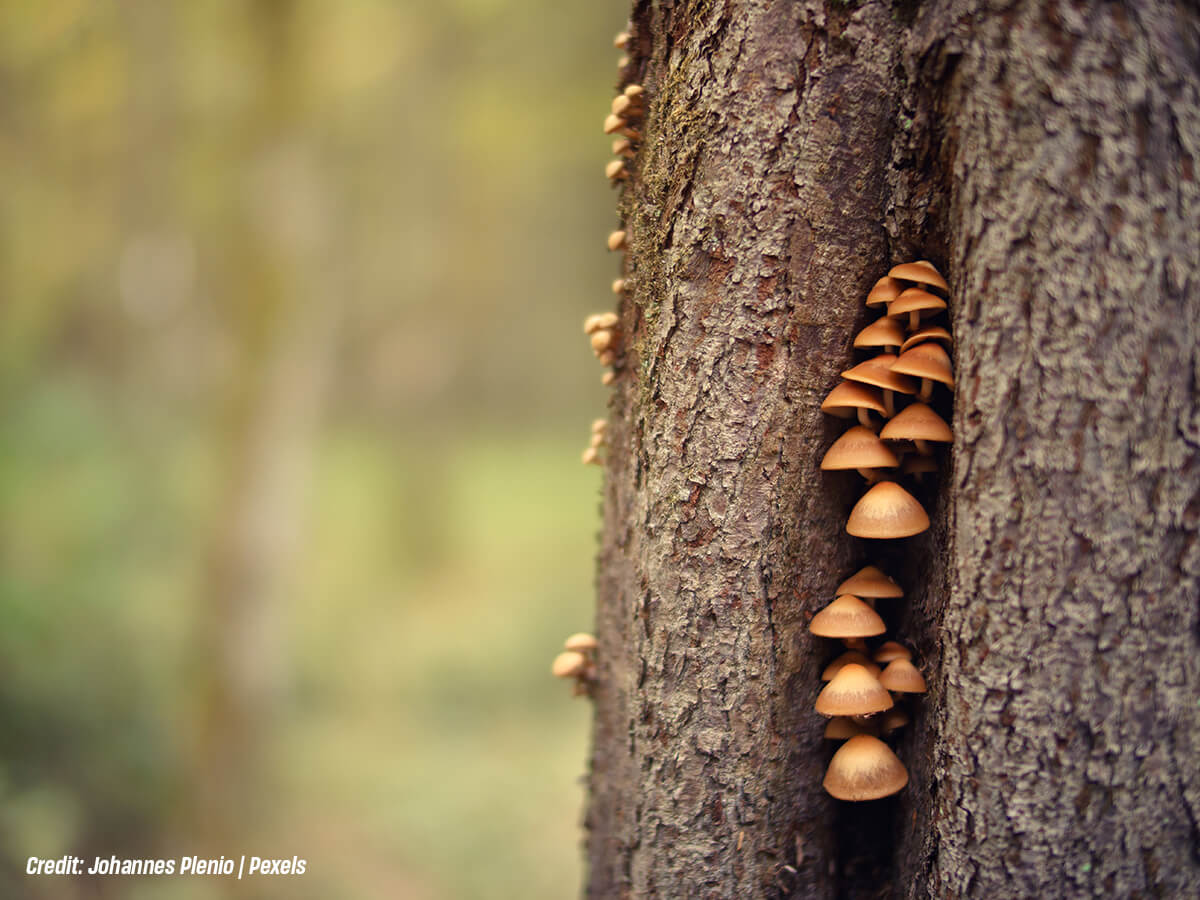
Fungi on trees are almost always a sign of poor health or infestation. Fruiting bodies growing specifically from a limb, a union, or the base of the trunk signal decay that has been working through the interior, perhaps for years by the time you discover them. The mushroom you can see is only the reproductive structure; the fungus itself has already consumed sound wood, and to the limb may be compromised at that point. Many of these diseases are contagious, and can easily spread across the area. As such, dealing with such infections early is always key to minimizing the spread (as is the case with the recent cases of Dutch elm disease in Edmonton).
5. Is the Bark Peeling, Sunken or Discoloured?
Healthy bark sits tight against the wood beneath it. Loose plates that fall away at a touch, sunken depressions, dark oozing sap, or a patch noticeably paler than the rest all point to dead tissue underneath. A limb stripped around more than half its circumference rarely recovers, and so the safest measure now might be to have the limb removed before it falls.
6. Are There Cavities, Hollows, or Fine Sawdust Nearby?
Open holes reduce the amount of wood available to carry weight. As a rough guide, a cavity wider than one third of the limb’s diameter leaves too little sound material to be reliable. Meanwhile, fine sawdust in bark crevices or on the ground suggests boring insects at work inside, hollowing the tree to make nests and compromising the branch’s integrity.
7. Does the Limb Hang Lower than It Used to?
Compare a suspect limb against a fixed reference like the eaves, a fence line, a garage door. A branch that has noticeably dropped several centimetres over one season, and stays low after the leaves fall, is losing integrity at the attachment or carrying more weight than its wood can support.
8. Is the Limb Overextended or Badly Balanced?
A branch stretching several metres from the trunk with its foliage bunched at the far end behaves like a lever, and weight at the tip multiplies stress at the union. Long horizontal limbs over a driveway, roof, or patio benefit from reduction pruning that shortens the lever.
9. Has the Tree Been Topped, Wounded, or Disturbed Recently?
Trees topped in the past tend to produce vigorous regrowth attached only to the outer edge of the old cut, and that regrowth fails readily once it gains size. Trenching or construction within the root zone weakens the whole tree, and the thin growth that follows often precedes limb loss.
10. Should You Bring in a Certified Arborist?
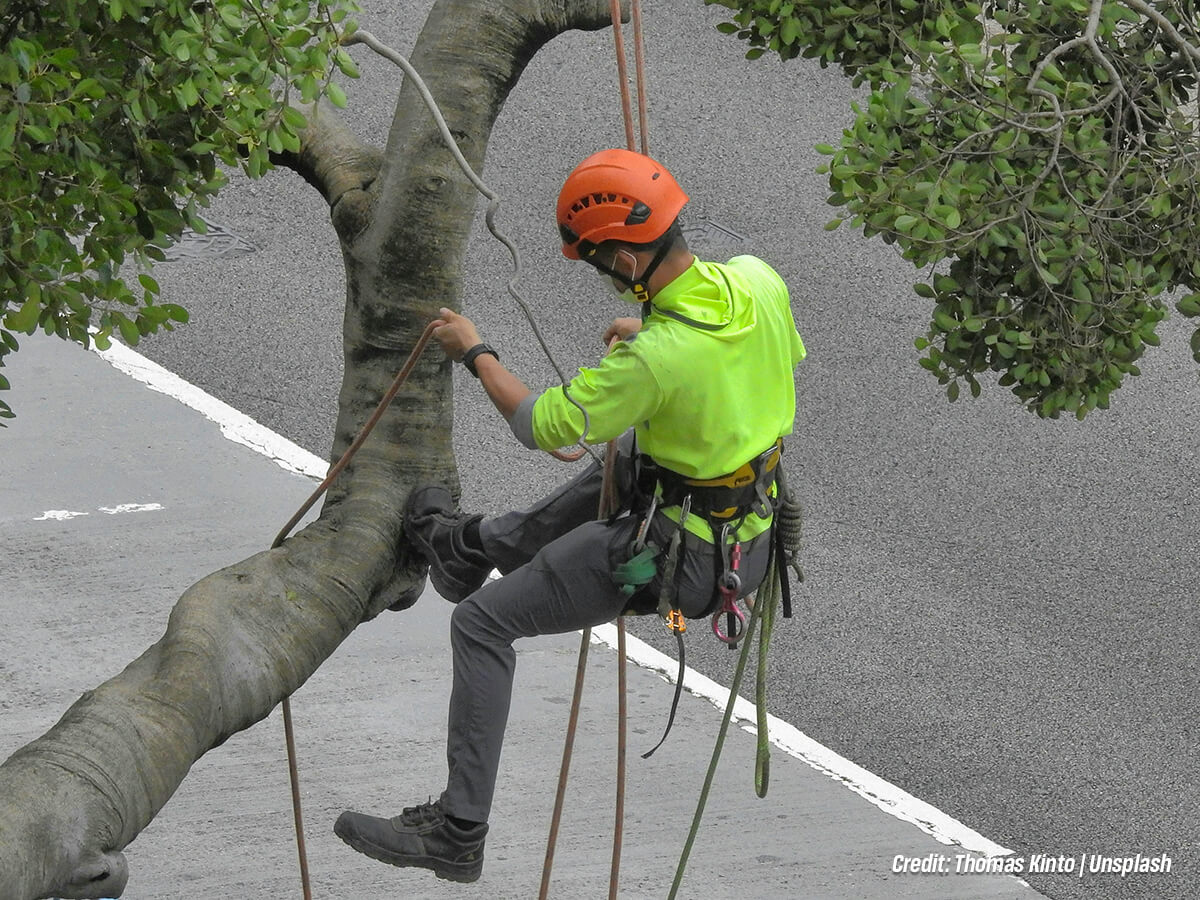
In case of any issues with your trees, it’s usually best to contact an arborist to handle the matter safely, for yourself and for the tree. As a rule of thumb, you’ll need an arborist whenever you cannot see the union between the branch and trunk clearly, the limb measures more than roughly 10 centimetres across, or it hangs over a structure, walkway, or power line. Ground-level inspection can detect problems, but it does have limits. And if you have to climb a ladder to tackle a problem yourself, you’re better off calling the pros to handle this problem that they’re trained and equipped to handle safely.
Trees rarely fail without warning; in fact they often provide ample warning before they fall. Whether it’s providing routine maintenance or keeping your trees safe during storm season, taking proactive care of your trees is always a task worth doing. The trick to detecting any failures early is to keep an eye out and know what to look for. Take some time twice a year to give your trees a close inspection, and keep these ten questions in mind to help you catch most trouble before it has a chance to fall.
Are you looking for a tree to give your home some extra shade and privacy? Then give Caledon Treeland a call. We provide a wide range of shade and privacy trees that do as much good for your comfort and privacy at home as for your house’s curb appeal. Call us now at (905) 880-1828 today and book a visit to our tree farm to find the right specimen to take home with you.
Frequently Asked Questions
1. How Often Should I Inspect My Trees?
You should inspect your trees twice a year (ideally in late winter and midsummer). Perform additional inspections after any major windstorm or ice event to ensure the weather hasn’t compromised any branches.
2. Can I Prune a Weak Limb Myself?
You can work on small, low branches that can be reached from the ground. However, for taller and thicker branches, it’s best to leave those limbs to an arborist.
3. Does a Hollow Always Mean Removal?
No, not always. Some trees compartmentalize decay, and if enough solid wood surrounds the cavity the limb may still be sound.
4. Is Winter a Good Time to Prune?
Yes, it’s an ideal time for pruning. Many tree species go dormant in winter, and respond well to pruning. The bare branches also make structural problems much easier to spot.
5. Do Young Trees Need Checking Too?
Yes, they especially need care. Correcting a narrow union in a young tree that can still be helped can prevent failures when the tree is older.