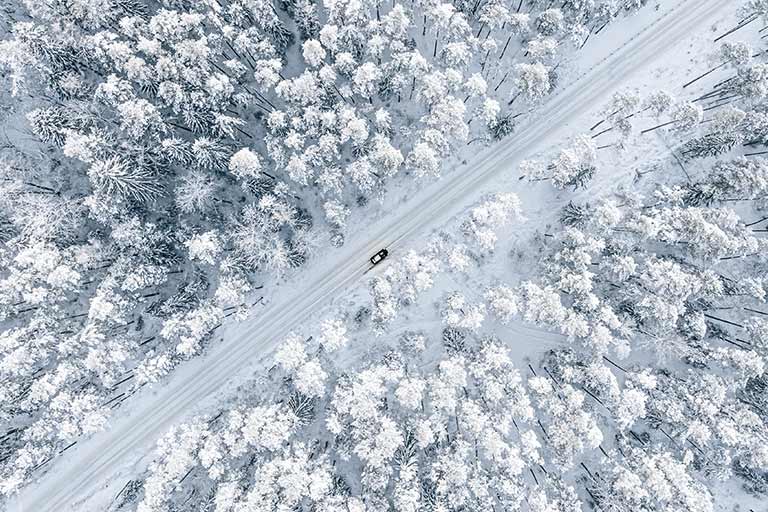
There’s no denying there’s a certain beauty to wintertime. The stark white blanket of snow covering everything outside your window can be quite a sight (especially if you’re snug and warm inside with a mug of seasonal hot chocolate). However, that same beauty also comes with certain issues, namely winter storms. These storms are no laughing matter; the strongest storms can affect thousands of people, knocking out power or and making outdoor conditions hazardous. Ice storms and heavy wet snow represent some of the most destructive forces in nature, and can turn your shade trees into significant liabilities. The weight of accumulated ice can exceed the load-bearing capacity of even the healthiest branches, leading to catastrophic failure.
Preventing storm damage requires more effort than simply reacting once the weather warning is issued. Keeping your home safe is a year-round commitment to your trees’ structural stewardship. By taking steps to better understand the mechanics of trees and implement a proactive maintenance schedule, you make some major strides in reducing the risk of property damage and tree loss.
1. Understanding the Mechanics of Ice Loading
To prevent damage, one must first understand how winter precipitation affects a tree. Ice accumulation creates a tremendous vertical load. A layer of ice as thin as 0.5 centimetres can increase the weight of a branch by hundreds of kilograms, depending on the surface area.
When this weight is applied, it creates leverage. The further the weight is distributed from the trunk (the fulcrum), the greater the stress on the branch union. Softwood species, which grow quickly but have less structural density, are particularly prone to snapping. However, even hardwoods can fail if the leverage becomes too great. The goal of prevention is to manage this leverage and strengthen the tree’s ability to withstand these extraordinary loads.
2. Identifying Structural Weaknesses
The first step in prevention is a thorough inspection of your property’s trees. What you’re looking for specifically is any architectural flaws that might compromise the tree’s strength:
Co-dominant Stems: This occurs when a tree has two or more main stems of similar diameter growing from the same point, often in the shape of a ‘V’. These unions are inherently weak because the wood fibres do not overlap effectively.
Included Bark: In tight V-shaped unions, bark often gets trapped between the two stems. As the stems grow in girth, they push against each other, acting like a wedge that splits the tree apart under the pressure of heavy snow or ice.
Asymmetrical Canopies: If a tree leans heavily to one side or has the majority of its branches on one aspect, the uneven weight distribution makes it highly susceptible to tipping over when soil is saturated and winds are high.
Decay and Cavities: Look for fungal conks (mushrooms) growing on the trunk or root flare. This usually indicates internal rot, which hollows out the wood and destroys its structural integrity.
3. Implementing Structural Pruning
Pruning is the most effective method for mitigating winter risks, but it must be done correctly, ideally by a professional arborist who knows which branches to remove and how. Like any task, there are some dos and don’ts for pruning that direct how the process goes. Ultimately, the objective isn’t just to remove branches in and of itself, but to improve structure.
Crown Cleaning: This involves the removal of dead, dying, or diseased branches. Deadwood is dry and brittle; it will be the first to snap during a storm, which can then damage lower branches, windows, or vehicles.
Reduction Cuts: Rather than topping a tree, which is a process that removes much if not the entire top of the tree, and is a harmful process that creates weak regrowth, reduction is a healthier and safer option. This process shortens a limb back to a lateral branch that is large enough to assume the terminal role. In terms of mechanics, this reduces the lever arm, effectively shortening the branch so it holds less weight during an ice event.
Thinning: Thinning consists of selectively removing branches to allow wind to pass through the canopy. This reduces the sail effect during winter gales. However, care must be taken not to remove too much live foliage, as this can stress the tree.
4. Cabling and Bracing Systems
For trees that have structural defects but are too valuable to remove, artificial support systems can provide a safety net.
Static Cabling: This involves installing high-strength steel cables between major limbs in the upper canopy. The cable limits the distance the branches can move apart, preventing V-crotches from splitting open under the weight of ice.
Bracing Rods: In scenarios where a trunk has already begun to split, or where the risk of failure at the crotch is imminent, threaded steel rods can be bolted through the union to hold the wood together rigidly.
Professional Installation: It is vital to note that cabling and bracing change the physics of the tree. These hardware installations should be designed and installed by a certified arborist to ensure they can withstand the dynamic loads of a Canadian winter.
5. Root Zone Management
A tree is only as stable as its anchor. Winter storms often bring high winds alongside precipitation. If the root system is compromised, the entire tree can uproot (windthrow), regardless of how strong the branches are.
Mulching: Apply a layer of organic mulch, such as wood chips, around the base of the tree. This acts as insulation, moderating soil temperatures and preventing the rapid freeze-thaw cycles that can heave roots. Ensure the mulch is 5 to 10 centimetres deep but kept several centimetres away from the trunk itself to prevent rot.
Hydration: Trees require water even in winter. Watering your trees deeply before the ground freezes is one way you can practise good autumn tree care, especially if the previous autumn was a dry one. Desiccated roots are brittle and provide less anchorage than healthy, hydrated roots.
Soil Protection: Avoid parking heavy vehicles or piling large amounts of snow over the root zones of prized trees. Soil compaction reduces oxygen availability, slowly suffocating the roots and weakening the tree over time.
6. Protecting Vulnerable Species and Young Trees
Knowing how to take care of younger trees goes a long way toward helping them thrive. These young trees have yet to take root and grow big enough to weather storms, so at this stage, they need some help from you to make it through the winter.
Burlap Wrapping: For upright evergreens like cedars or junipers, heavy snow can splay the branches permanently. Wrapping these trees loosely in burlap or using strong twine to tie the branches upward can prevent them from deforming.
Arbour Guards: Young trees with thin bark are susceptible to “sunscald” or frost cracking. This happens when the winter sun warms the bark during the day, and temperatures plummet at night. Wrapping the trunk with a plastic guard or tree wrap reflects the sun and insulates the cambium layer.
7. Managing Accumulation During the Storm
When the storm hits and you see your trees bending under the weight of ice and snow, the urge to intervene can be strong. However, improper intervention can cause more harm than good.
Avoid Shaking: Never shake a tree that is coated in ice. Wood fibres become much more brittle in freezing temperatures. Shaking a limb causes a “rebound” effect that can snap the branch instantly.
Gentle Brushing: If the accumulation is dry, fluffy snow on a hedge or small shrub, you can gently brush it off with a broom using an upward motion. However, if the snow has hardened or turned to ice, leave it alone. The attempt to remove it will likely peel away bark or break small twigs.
Wait for the Thaw: Trees are remarkably resilient. A birch tree may bend all the way to the ground under ice and slowly recover its upright position once the ice melts. Patience is often the best strategy during the event itself.
8. Post-Storm Assessment and Repair
Once the storm has passed and the ice has melted, a safety assessment is necessary.
Look for Hangers: “Widowmakers” are broken branches that are detached but caught in the canopy. These are extremely dangerous and can fall without warning.
Clean Cuts: If a branch has torn, it leaves a jagged wound that is difficult for the tree to seal over. You should prune the broken stub back to the branch collar (the swollen area where the branch meets the trunk) to facilitate proper compartmentalization of the wound.
Safety Zones: If a tree is leaning significantly or the soil around the base is heaved/cracked, restrict access to the area immediately. This indicates root failure, and the tree could fall at any moment.
9. Strategic Planting for Future Resilience
The best way to prevent storm damage is to plant the right tree in the right place. When adding to your landscape, consider the wood strength and growth habits of the species.
Species Selection: Slow-growing hardwoods like oaks, sugar maples, and ironwoods generally have higher wood density and better resistance to ice loading than fast-growing species like poplars, willows, or silver maples.
Windbreaks: Planting trees in groups can provide mutual protection. A solitary tree takes the full force of the wind, whereas a grove dissipates the wind energy, protecting the individuals within it.
10. The Value of Professional Help
While homeowners can handle minor pruning and inspection, tree work is inherently dangerous, especially involving storm-damaged trees under tension. Complex structural pruning, cabling, and removal of large hazards require the equipment and expertise of a certified arborist. Viewing tree maintenance as an investment rather than an expense ensures your landscape remains safe and beautiful through the harshest winter conditions.
Winter storms are inevitable, but catastrophic tree damage doesn’t have to be. By committing to being more proactive with your tree care, you can more easily safeguard your property against the elements. A little diligence with your trees goes a long way toward keeping them safe and allowing you to enjoy the benefits of those trees for years to come.
Finding the right shade and privacy trees for your home can be a boon. At Caledon Treeland, we are committed to providing a wide range of trees to suit your needs and your local conditions. Call us now at (905) 880-1828 and visit our tree farm to find the right tree for your landscape.