
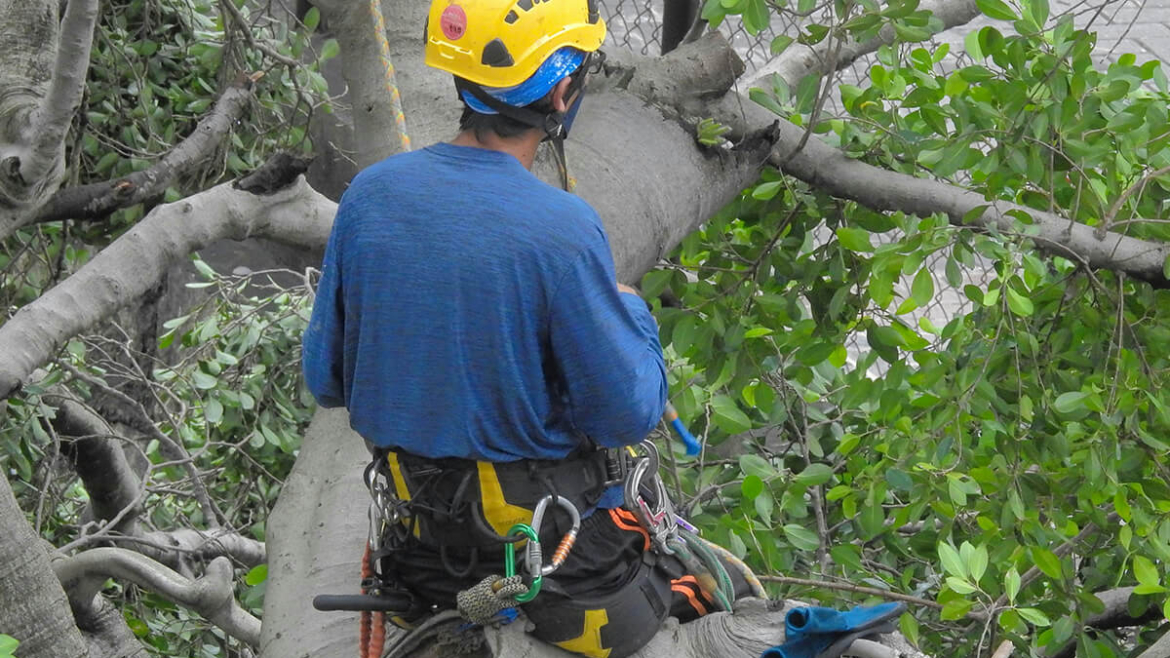
There’s no denying trees are great for a home. They boost your curb appeal, but more than adding to your home’s value, trees also provide beauty, shade, and cooling, adding to your quality of life. However, just having a tree isn’t the end of the story. You also have to maintain the tree, to keep it beautiful and comfortable. A tree with a dense, overgrown canopy can quickly become a liability, especially once summer hits. Too thick a canopy means air can’t circulate, which leaves the environment around the tree stagnant. Aside from impacting your comfort in the tree’s shade, these stagnant air conditions are favourable to fungal infections, prolonged leaf wetness after rain, and a higher risk of branches cracking in any summer storms. The answer to these problems is pruning, which is as beneficial for the tree as it is for you. Pruning allows you to open up the canopy, allowing gentle breezes to pass through rather than pushing against a solid wall of foliage. Knowing how to properly prune your tree is a must for providing year-round tree care that keeps yours healthy and vibrant. Enhancing the air circulation within the canopy is fundamental for long-term vitality, and is another task to help maintain the tree’s health. Here is a guide to helping you achieve the ideal canopy structure.
1. Eradicate Dead and Diseased Branches
Step one of any structural pruning effort is completely removing dead branches; these branches are wood that no longer contributes to the tree’s health and vigour. Instead, these dead branches block the natural flow of air through and around the tree. Carefully removing these branches allows you to create some internal space around the tree, improving air flow. These dead branches are very often infected as well; removing them helps prevent pathogens from thriving in the stagnant, humid air of an overcrowded canopy.
2. Strategically Thin the Crown for Maximum Effect
The object of crown thinning is to selectively remove live branches from throughout the entire canopy, specifically targeting the outer edges. The goal here is to increase light penetration and air movement without altering the tree’s natural shape. Focus specifically on removing smaller branches, and do your work evenly across the trunk. By evenly distributing these removals, you create a more porous canopy that filters the wind. You want a well-thinned tree that allows dapples of sunlight to reach the ground. Practice moderation as you go, however; removing too much live foliage stresses the tree and impacts its health.
3. Eliminate Crossing Limbs
As trees mature, you might find some branches that have grown inward at awkward angles, causing them to cross and rub against one another. As the wind blows, the constant friction of the branches rubbing together can wear away the protective bark and create open wounds that leave the tree vulnerable to decay. Tangled clusters of branches also form dense pockets that trap humidity and block breezes. Proper tree maintenance requires identifying these problematic branches and removing the least desirable ones. Doing so frees some space and opens a channel that allows air to flow unimpeded.
4. Elevate the Lower Canopy
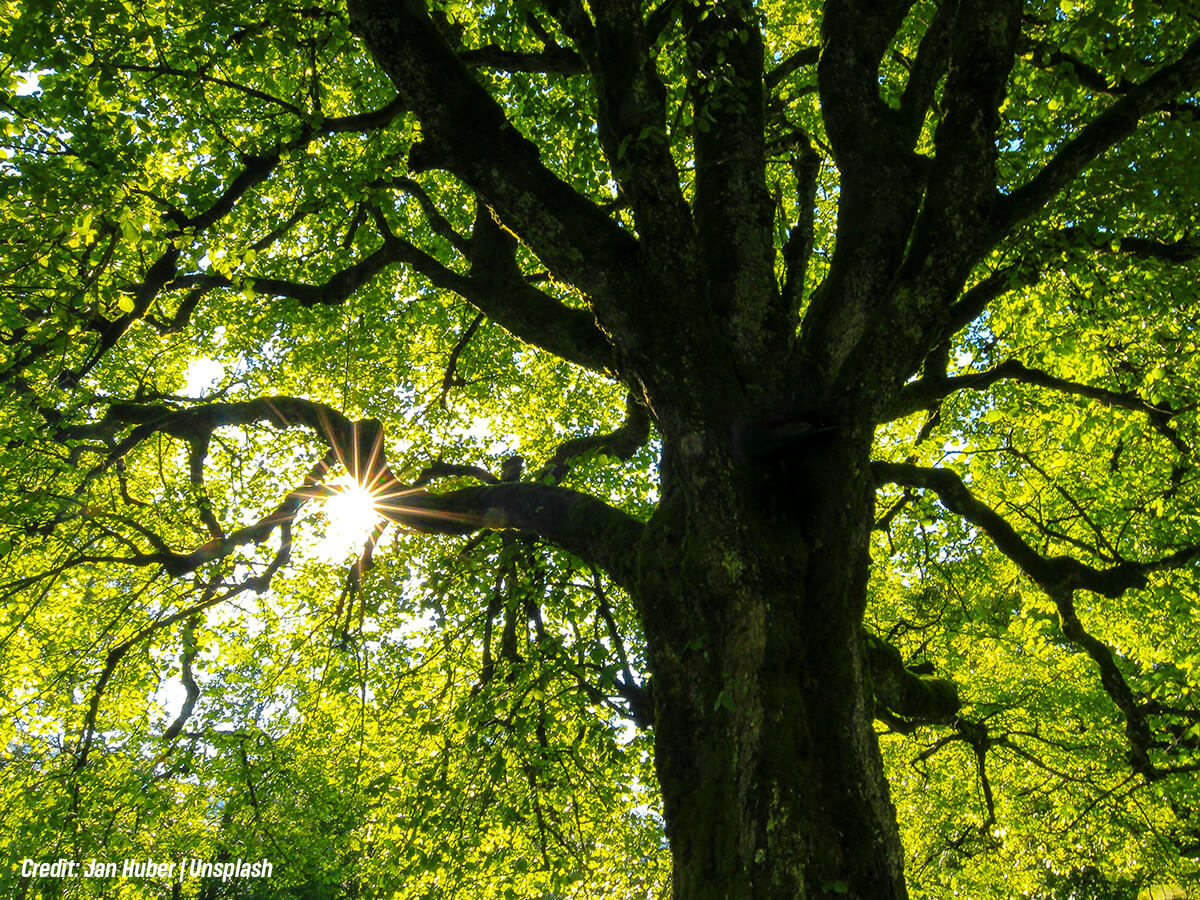
Crown raising involves the careful removal of the lowest branches on the trunk. While primarily done to provide clearance, it plays a critical role in optimizing airflow around the base of the tree. When lower branches droop too close to the ground, they trap moisture rising from the soil and restrict the breeze that can sweep beneath the tree. By raising the canopy even a little, you establish a clear zone that encourages ground-level air circulation, drying out the root flare.
5. Clear Out Internal Water Sprouts
Take a close look at the main trunk and the primary scaffold branches. You may have noticed rapid, vertical growth shooting straight up from the bark; these are known as water sprouts. These vigorous shoots clutter the interior space and act like a thick brush, which can severely restrict internal air movement. Cleanly cutting these shoots off at their origin clears the interior and removes that obstacle to airflow. Keeping the inner framework clear ensures breezes travel across the tree without obstruction.
6. Refine Spacing Between Branches
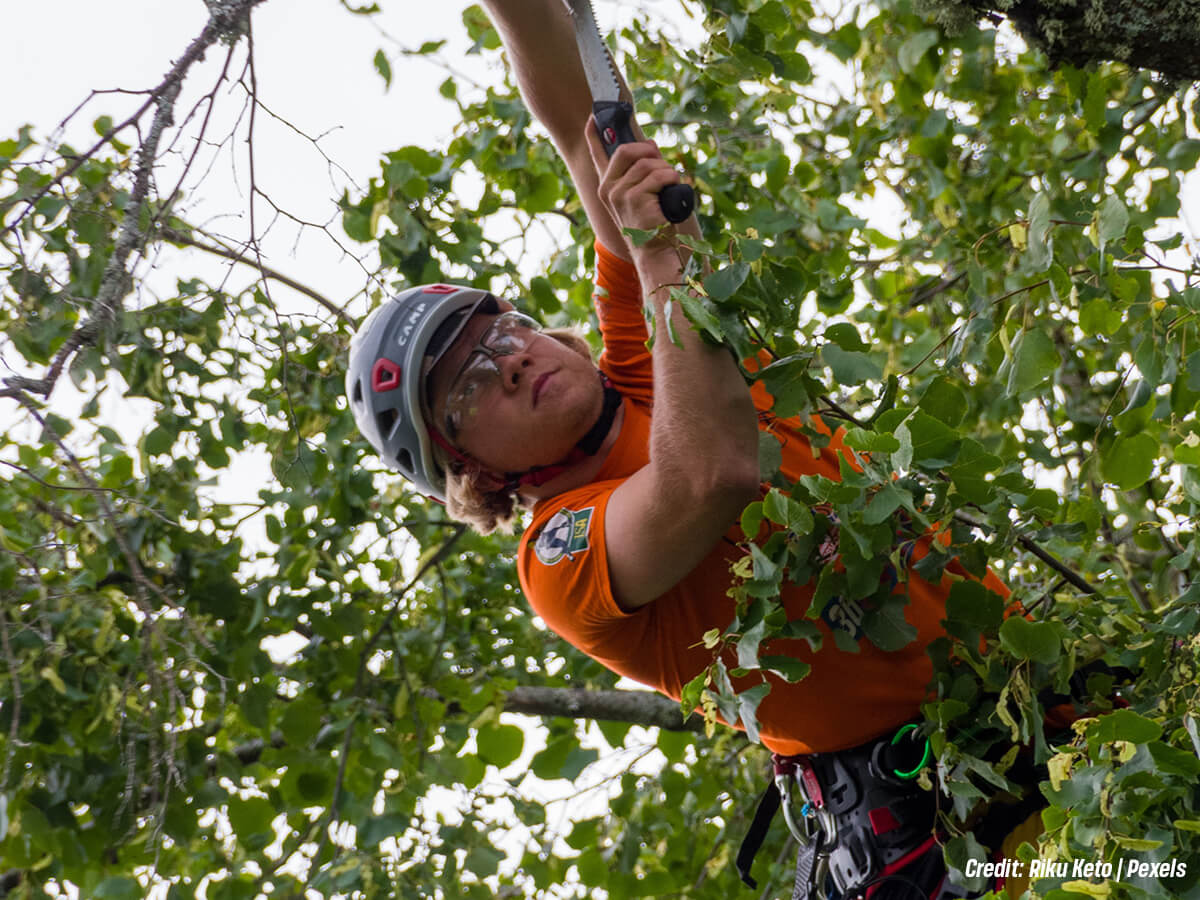
For optimal structural integrity and maximum airflow, the major lateral branches growing off the central trunk must be well-spaced. If multiple large branches originate from the exact same height on the trunk, they create a congested node. Meanwhile, if two major limbs grow closely together, one can be subordinated or removed. Ideally, major branches should be spaced some distance apart along the trunk; you want a more staggered pattern that allows air to glide smoothly between the branches.
7. Utilize Precise Pruning Cuts
Knowing the dos and don’ts of pruning trees is a must for doing the job properly. One of the most important is knowing how and where to cut to minimize damage to the tree. To ensure your pruning efforts successfully optimize airflow, every cut must be made just outside the branch collar. The branch collar is that swollen, raised area where the branch meets the trunk. It’s so vital you make careful, precise cuts because a stub invites decay; meanwhile, cutting flush into the trunk damages the tree’s natural defences. A clean, precise cut, on the other hand, encourages rapid healing. When cuts are made correctly, the tree can seal the wound more easily and with less energy, allowing it to focus on healing clean and making a more open canopy rather than recovering from a grievous wound.
The more you know about shade trees, the easier it is to realize that they’re a boon for keeping your home comfortable. But knowing how trees keep us cool is only part one; part two is knowing how to take care of it, ensuring it continues to keep your home comfortable. Optimizing airflow through your tree’s canopy in this way ensures its long-term health and structural stability. Think of a dense, overgrown tree as a sail catching the wind; this situation leaves it all the more vulnerable to snapping and uprooting during intense weather events. By systematically evaluating and pruning the branches, you transform what could be a more solid structure into a more porous one instead. Regular maintenance using these fundamental techniques rewards you with a resilient tree. Remember that careful, moderate pruning over several seasons is always preferable to drastically altering the canopy all at once.
Ready to transform your property with mature shade trees? Our team here at Caledon Treeland is here to help make that job all the easier. We offer premium shade and privacy trees perfect for turning your yard into a private sanctuary. Give us a call now to visit our tree farm and shop around for the ideal tree for your home! You can reach us at (905) 880-1828 and get started right away.