Trees are very often silent additions to many a home, but they offer a great deal more than some appealing elements to touch up curb appeal. They also provide shade and privacy, providing greater quality of life for your home that can make your life far more comfortable and convenient than without them. However, many homeowners view trees as set it and forget it features that don’t require too much work to plant, much less maintain. In reality, planting a tree properly requires ample care, much less maintaining it afterward. It takes a consistent, season-by-season approach to help your trees thrive over the years. To keep your trees healthy takes careful management of a varied set of maintenance requirements.
The following guide outlines the essential do’s and don’ts of year-round tree maintenance to ensure your leafy companions remain robust for generations.
1. DO: Mulch Correctly for Moisture Retention
Mulching is one of the most beneficial steps a homeowner can do for a tree; however, many homeowners make the mistake of doing the job incorrectly. A proper layer of organic mulch (such as wood chips or shredded bark) is meant to mimic features of a natural forest floor. And like a forest floor, the mulch is there to regulate soil temperature, suppress weeds, and, most importantly, retain moisture during the dry summer months.
When applying mulch, aim for a depth of roughly 5 to 10 centimetres. Ensure the mulch ring extends out to the drip line; this is the area directly under the widest range of the tree’s branches and where the fine feeder roots that do much of the work of absorbing water and nutrients are most active.
2. DON’T: Create “Mulch Volcanoes”
While mulching is vital, the mulch volcano is a common and deadly mistake. This improper form of mulching occurs when mulch is piled high against the trunk of the tree in a conical shape instead of around. This practice traps moisture directly against the bark, which can lead to rot and provide a primary entry point for insects and fungal pathogens.
Bark needs to breathe and stay dry to protect the inner vascular system of the tree. To enable the tree to do just that, leave a gap of about 5 to 8 centimetres between the mulch and the base of the trunk. The finished application should look less like a mountain and more like a donut.
3. DO: Prune During the Dormant Season
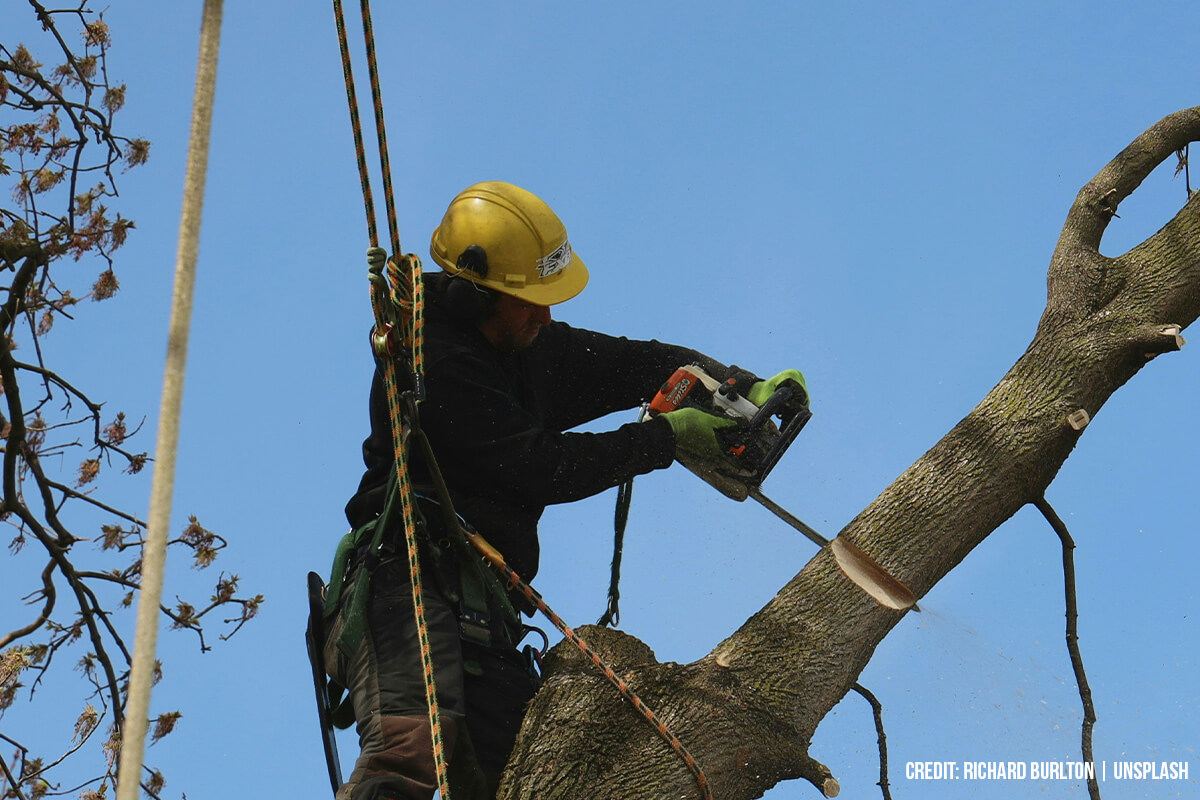
For many Canadian tree species, the ideal time to prune is in late winter or early spring, before the buds begin to swell. During this dormant period, the tree is not actively growing, which minimizes stress. Furthermore, without leaves, the structural skeleton of the tree is visible, making it easier to identify structural weaknesses like crossing branches or narrow crotches.
Pruning when the ground is still frozen also prevents soil compaction around the root zone from heavy equipment or foot traffic. Additionally, many pests and diseases are dormant in the winter, reducing the risk of infection at the site of the pruning cuts.
4. DON’T: Top Your Trees
“Topping” is the practice of cutting back large upright branches to stubs. It is often done under the mistaken belief that it will make a tree safer or more manageable in height. In reality, topping is one of the most harmful things you can do to a mature tree.
Topping triggers a survival mechanism where the tree produces epicormic sprouts (these are rapidly growing, weak shoots that are poorly attached to the bark). These shoots grow much faster than normal branches, meaning the tree will return to its original height quickly, but with a much more hazardous structure. It also leaves large, open wounds that the tree cannot easily compartmentalize, leading to internal decay.
5. DO: Water Deeply During Droughts
Even established trees need supplemental water during prolonged dry spells; regular watering during winter, for example, is one way to keep them healthy while you wait for spring. Once the summer months hit, a tree can lose hundreds of litres of water through transpiration. A simple way of addressing that water loss is through amending your watering technique. Rather than frequent, shallow watering, which encourages roots to stay near the surface, aim for deep, infrequent soakings.
The goal is to moisten the soil to a depth of at least 25 to 30 centimetres. A slow-release watering bag or a soaker hose coiled around the drip line is the most efficient method. This technique encourages the root system to grow deeper into the soil, making the tree more resilient against future droughts and high winds.
6. DON’T: Use Broad-Spectrum Herbicides Near the Root Zone
Maintaining a pristine lawn often involves the use of herbicides to kill weeds. However, the root systems of trees often extend two to three times the width of the canopy. Many “weed and feed” products contain chemicals that do not distinguish between a dandelion and a tree root.
If these chemicals leach into the soil, they can be absorbed by the tree, which can have serious effects on its health. If you must use herbicides, apply them as a spot treatment rather than a broadcast spray, and avoid the area within the tree’s drip line entirely. Hand-pulling weeds or using mechanical edges is always the safer choice for arboreal health.
7. DO: Protect the Critical Root Zone During Construction
If you are planning a home renovation, a new driveway, or even a small landscaping project, it’s vital you protect the Vital Root Zone (CRZ). Soil compaction is a silent killer of trees; when heavy machinery or even piles of building materials are placed over the roots, any tiny air pockets in the soil get crushed from the pressure.
Roots need oxygen to survive. Once the soil is compacted, the tree can slowly suffocate over a period of several years. Before any work begins, install a sturdy fence around the CRZ to keep traffic and materials away. Remember that the roots you cannot see are just as important as the branches you can.
8. DON’T: Ignore Cavities and Fungal Growth
Visual inspections are a key part of year-round maintenance, especially when it has to do with preventing pests and infection this spring. If you notice “conks” (mushroom-like structures) growing on the trunk or at the base of the tree, it’s very often a sign of internal heartwood decay. Similarly, deep cavities or large cracks in the trunk can indicate structural instability.
While a cavity doesn’t always mean a tree is dying, it does mean the tree’s structural integrity has been compromised. Do not attempt to fill these cavities with cement or foam, as this can actually accelerate rot by trapping moisture. Instead, have the tree assessed by a certified arborist to determine if it poses a safety risk.
9. DO: Monitor for Invasive Pests
Trees are commonly at risk from pests, and so vigilance is always a must. Homeowners should regularly inspect their trees for signs of infestation. For example, the Emerald Ash Borer leaves distinct D-shaped exit holes, while the Spongy Moth can defoliate entire canopies in a matter of weeks.
Early detection is the only way to save an infested tree. Look for thinning crowns, yellowing leaves out of season, or unusual sawdust-like material (frass) on the bark. If you suspect an invasive pest, contact your local municipal forestry department or a professional service immediately to discuss treatment options.
10. DON’T: Attempt Major Tree Work Yourself
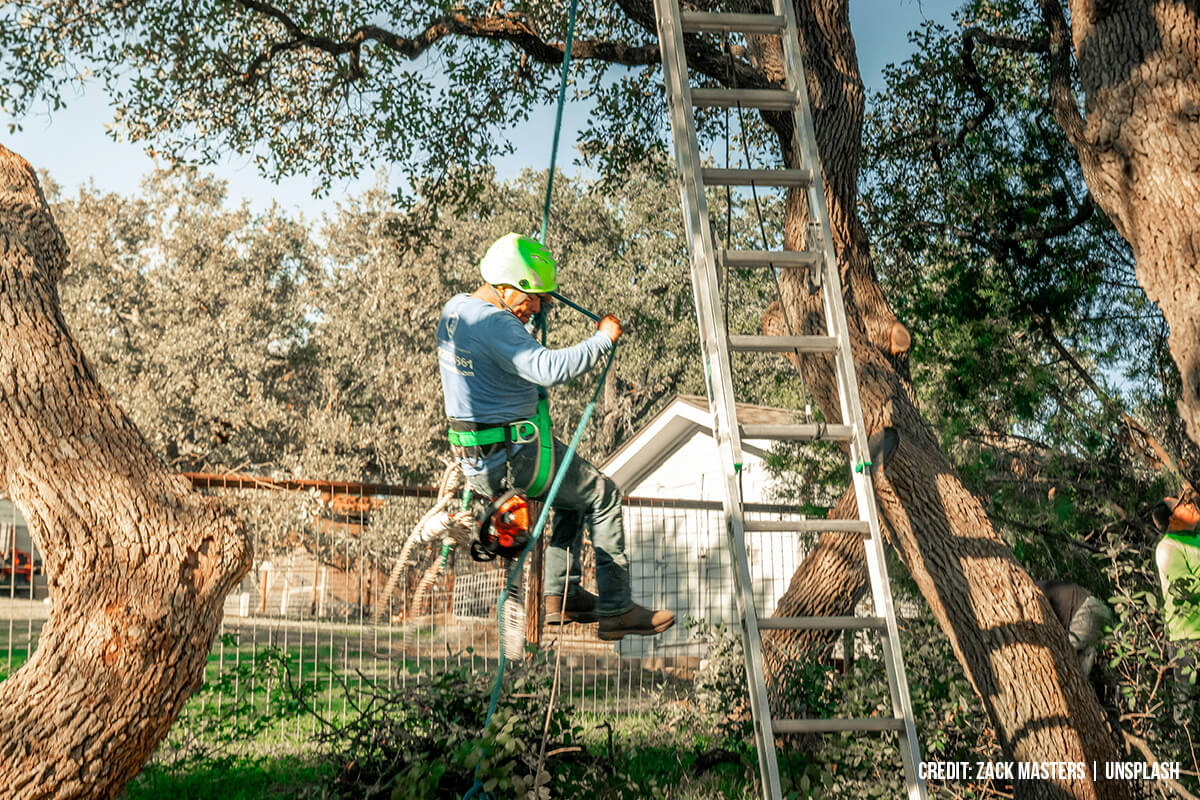
While DIY projects are popular, major tree maintenance is not a hobby for the inexperienced. Pruning large limbs or removing entire trees involves significant risks to personal safety and property. Without the proper rigging equipment and knowledge of physics, a falling limb can behave in unpredictable ways.
Furthermore, improper cuts can permanently damage the tree’s health. A professional arborist understands tree biology, and with that knowledge they know where to cut to ensure the tree can properly heal the wound. For any work that requires a ladder or a chainsaw, it is always worth the investment to hire a certified, insured professional.
Maintaining trees at home always takes a balance of patience and proactive care. With the weather increasingly taking a turn for the worse, proactive tree maintenance becomes all the more important in turn. But with the help of these simple dos and dont’s, you can take steps to look after your trees’ appearance and health (and to a more targeted degree than you might otherwise achieve). A well-cared-for tree is an asset, and one with ample utility. That healthy tree is as much a boon for your curb appeal as it is for your quality of life at home. Consistent monitoring and proper techniques are the keys you need to ensure your trees remain a towering presence in your neighbourhood for many decades to come.
Ready for a quieter and more comfortable home? At Caledon Treeland, we pride ourselves on providing shade trees to boost your home’s curb appeal and create a more inviting and comfortable space. We help you find and plant the right trees to keep you cool and private, and enhance your home’s value and appeal white we’re at it. Call us now at (905) 880-1828 and book a visit to our tree farm to find a tree that’s just right for you.