Summer can be tough, and not just for people. The hot, dry weather can take its toll on your plants as well, your trees in particular. When temperatures climb and rain becomes scarce (as is the unfortunate case in many parts of Canada), trees may experience a condition known as heat stress. This consists of a tree losing moisture through its leaves faster than its roots can pull replacement water from the soil. While trees possess natural defence mechanisms, prolonged exposure to extreme heat compromises their long-term health. Your tree is like any other plant on your property: it’s a living organism that takes care and attention from you to thrive and stay healthy. Recognizing early warning signs of conditions like heat stress is crucial to protecting and nurturing your trees, ensuring they continue to thrive and provide the benefits you’re accustomed to (like shade and cooling). Thankfully, you can do something about this problem by staying vigilant and taking action as soon as you detect those telltale clues. By catching symptoms quickly, you can intervene with a deep watering regimen to help them recover. Here are seven distinct, easily visible signs that your beloved trees are suffering.
1. Wilting and Drooping Foliage
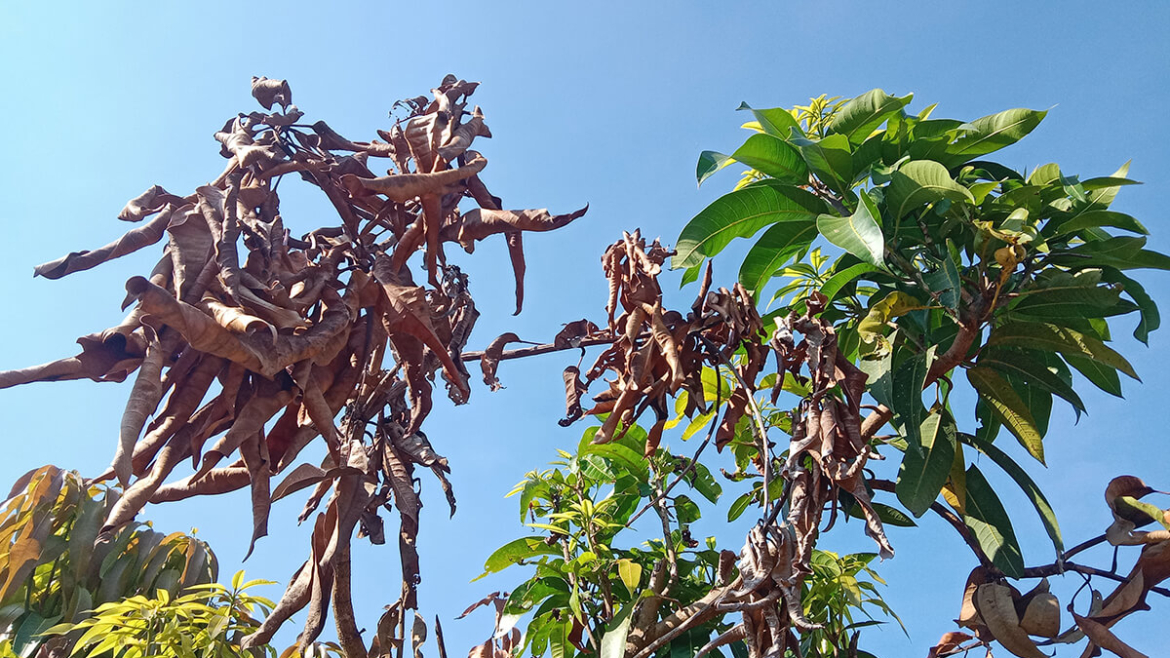
Wilting is one of the most immediate indicators that a tree is struggling with high temperatures and dry conditions. When moisture drops, cells within the leaves lose their essential turgor pressure; this is the internal water pressure that keeps them rigid. To conserve remaining water and reduce sun exposure, the tree allows its leaves to droop. During a severe heat wave, the entire canopy might take on a limp appearance. While minor midday wilting can be a temporary defence, prolonged drooping into cooler morning hours is a definitive cry for help.
2. Leaf Scorch and Discolouration
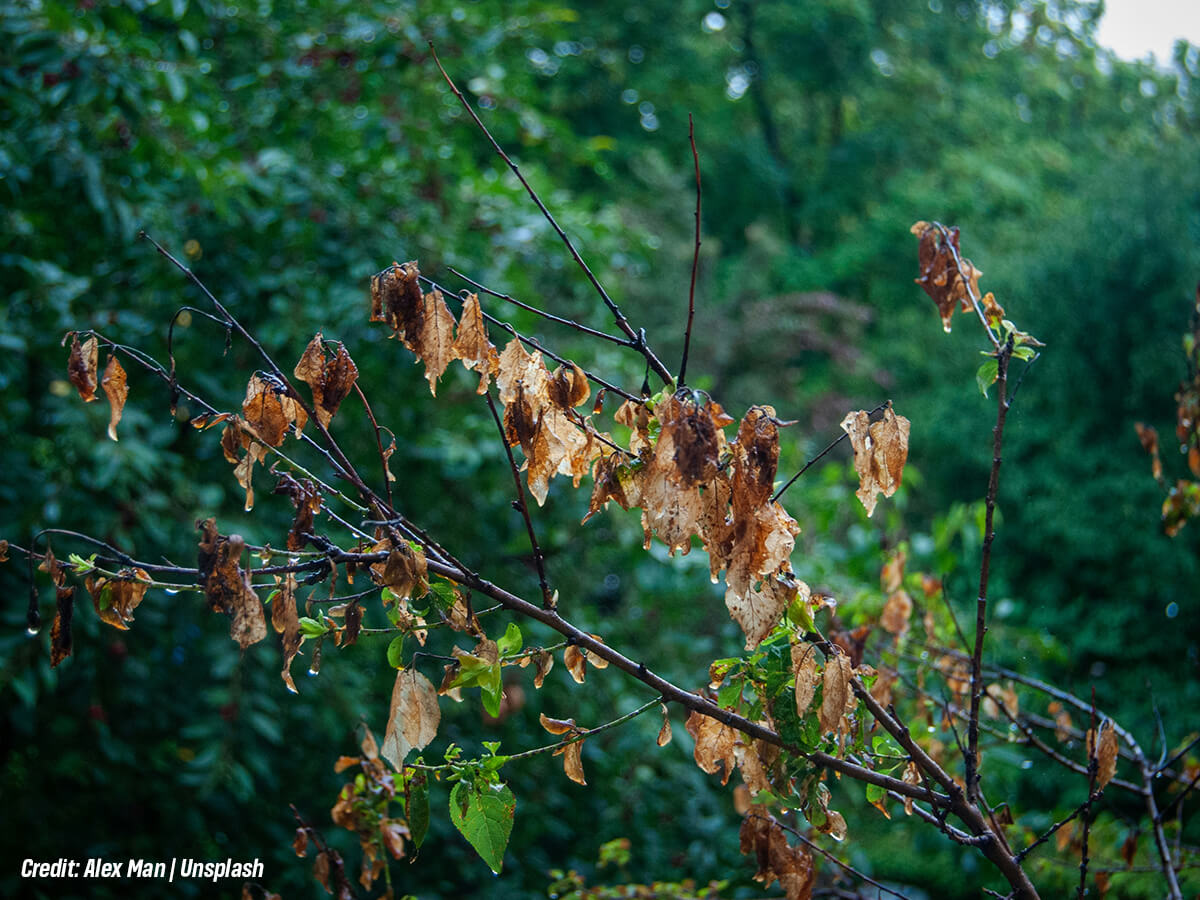
If wilting is ignored, the struggling foliage inevitably progresses to leaf scorch; this typically manifests as browning or yellowing followed by dropping from the trees. Unlike the uniform colour changes of autumn, leaf scorch gives itself away with its harsh and irregular appearance. When moisture runs short, it’s typically the tissue on the leaf margins that dies first. You may also notice a dull discolouration across the canopy, as extreme heat destroys the chlorophyll responsible for the vibrant green hues of healthy foliage.
3. Premature Leaf Drop
Shade trees are an effective way to shade the house and keep it cool, but it needs its canopy to do so. When a tree cannot sustain its entire canopy due to profound heat stress, it’s forced to make a drastic sacrifice. To rapidly reduce water loss transpiration, the tree prematurely sheds perfectly green or slightly yellowed leaves as a strict survival tactic to preserve the vital trunk and root system. If you find your lawn covered in fallen leaves when it’s still far too early for fall, your tree is entering forced dormancy to protect itself from sweltering temperatures.
4. Bark Cracking and Sunscald
While most folks focus on the leaves when a tree starts to show signs of issues, the main trunk is equally vulnerable to intense afternoon sun. Sunscald occurs when heat bakes the bark. Sudden temperature fluctuations between scorching afternoons and cooler nighttime air cause bark tissues to expand and contract rapidly. This extreme stress results in vertical cracks or deep, visible fissures along the trunk. These cracks, which can reach several centimetres in width, damage structural integrity and create open wounds where dangerous pathogens easily enter and infect the tree.
5. Oozing Sap or Bleeding
Certain tree species, particularly native conifers and stone fruit varieties, react to severe environmental stress by exuding resin. If you notice thick, sticky sap oozing from the trunk or major branches without any obvious signs of mechanical injury that might have prompted such a move, this bleeding is a direct stress response. Extreme heat disrupts the internal flow of nutrients, creating pressure imbalances that force sap outward. While sap is natural, excessive bleeding during a heat wave signals that internal systems are struggling to cope with soaring temperatures.
6. Stunted Growth and Undersized Leaves
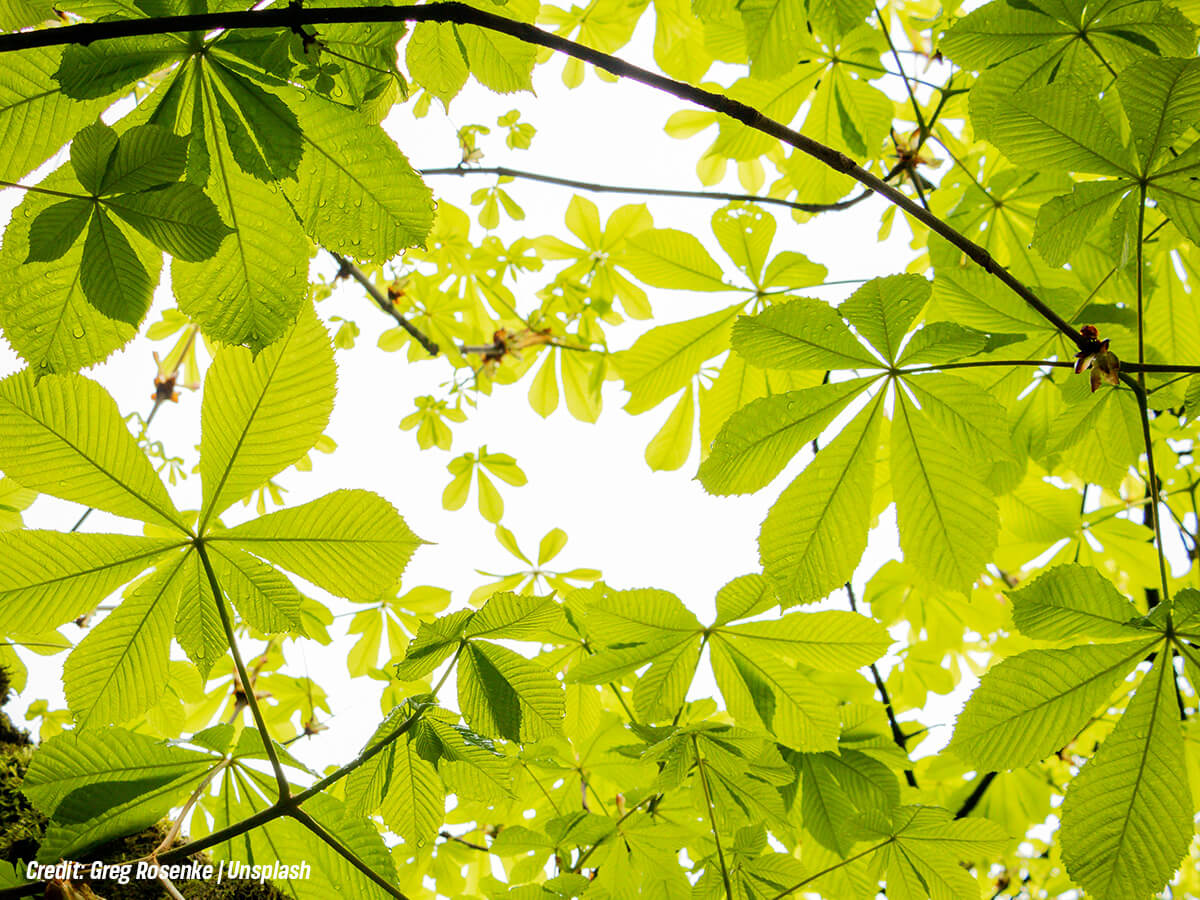
A tree experiencing chronic heat stress redirects available energy into basic survival instead of pushing out lush new growth. If a prolonged heat wave strikes early in the season, newly formed leaves may be significantly smaller than normal, sometimes just a few centimetres in width. Overall branch extension also becomes stunted. In this case, the tree simply lacks the hydration and metabolic resources necessary to support normal development, resulting in a thin, sparse canopy that fails to provide the cooling shade you expect, and fails to sustain the tree with sufficient leaf coverage.
7. Increased Susceptibility to Pests
A healthy, thriving tree boasts robust natural defences against insects, frequently pushing out invading bugs with strong sap flow. Heat-stressed trees, however, are highly vulnerable. When weakened by dehydration, a tree emits distress signals that wood-boring insects can detect from remarkably far away. Once compromised, pests move in quickly, attacking the remaining foliage and trunk in rapid succession. Sudden infestations of common tree pests like aphids, mites, or borers during a period of intense heat very often tends to coincide with other symptoms of heat stress; the presence of these pests is a secondary symptom of an already severely stressed tree.
While your trees can help you beat the heat and keep your AC bills low, it’s still vital to recall that they can feel the heat too. Heat stress remains a formidable challenge, but it’s not an insurmountable one. Recognizing these seven signs serves as your first line of defence, and clues you in to the presence of a problem that you can then take steps to address. When the weather turns scorching, pay close attention to subtle changes in your landscape. By providing a little extra care at a harsh time, you can lock in vital moisture and help save your tree. With vigilant observation and timely care, you can guide your trees safely through the harsh summer weather, ensuring they remain strong and vibrant.
Ready to elevate your property’s aesthetic and privacy? Caledon Treeland offers a range of beautiful shade and evergreen trees to help you transform your landscape. A few strategically-placed shade and privacy trees go a long way toward making your home all the more comfortable for you and your family. Contact us today at (905) 880-1828 to book a visit to our tree farm and find the right tree for your home!