
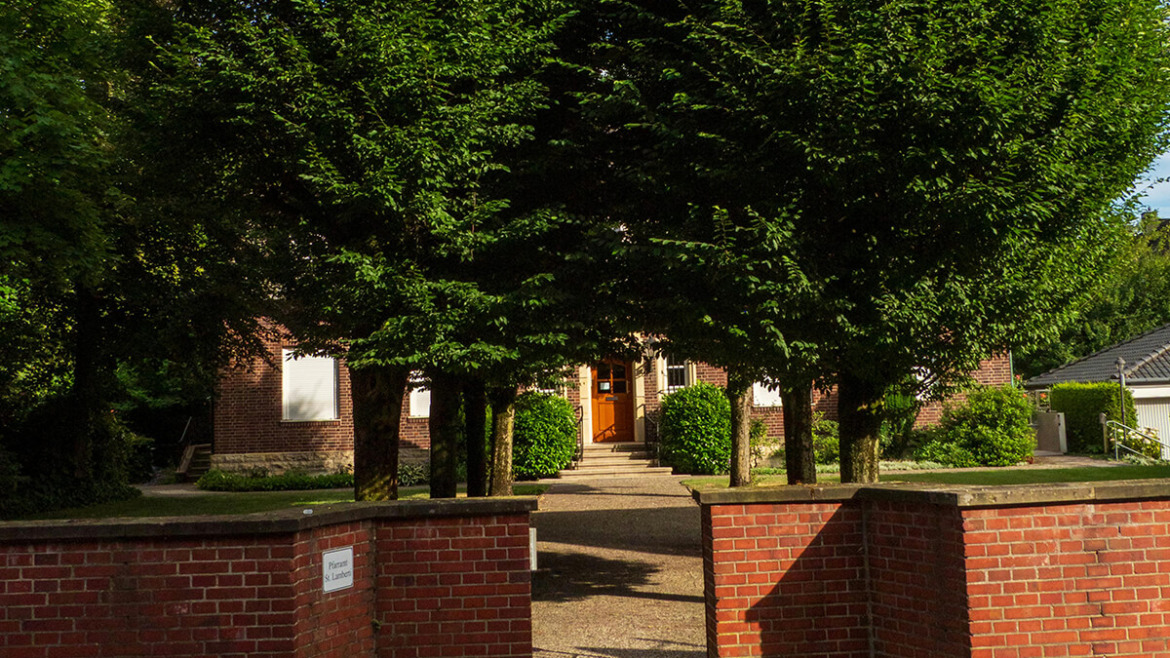
Trees are good for more than adding appeal to your home or providing comfortable shade for your outdoor spaces; they can add a little privacy to your property while they’re at it. There is a unique tranquility that comes from stepping into your own backyard and feeling completely secluded, as if it were a private extension of your home. However, for those living in dense neighbourhoods, creating this sense of a personal sanctuary can feel like a challenge. While fences offer an immediate solution for setting boundaries, they can feel stark and imposing. A far more elegant, beautiful, and living alternative is the privacy screen, a carefully chosen and placed row of trees that transforms an exposed yard into a peaceful retreat. This row of trees does more than keep the outside world out; it also goes a long way to enhancing your home’s curb appeal and comfort. This guide will walk you through some of the essential steps, from initial planning to selecting the perfect species for your garden, helping you cultivate a natural barrier that offers beauty, solitude, and a connection to nature.
—
Foundational Considerations Before You Plant
Before you even touch a shovel, a thoughtful planning phase is crucial to the long-term success of your living fence. Investing time at the beginning of your endeavour goes a long way to preventing future headaches and ensuring your green wall thrives for years to come.
1. Analyse Your Privacy Needs
The first step is to precisely identify your screening objectives. Walk around your property and take note of the specific sightlines you wish to block. Are you trying to obscure a neighbour’s second-storey window that looks directly into your kitchen? Is the goal to create an intimate atmosphere on your patio, shielded from the view of the street? Or do you require a complete visual barrier along an entire property line? The nature of your need will dictate the type, height, and density of the trees required. Consider the dimension of time as well. If your main concern is privacy during the summer months when you’re using the yard most, deciduous trees that lose their leaves in winter might be suitable. However, for year-round seclusion, evergreen trees, which retain their foliage through every season, are the usual choice.
2. Assess Your Site and Climate
Every garden has a unique set of environmental conditions that will determine which plants flourish and which ones struggle; understanding your specific site is paramount to helping your privacy trees thrive. Begin by identifying your agricultural hardiness zone, a crucial piece of information for any Canadian gardener, as it tells you which plants can survive your region’s minimum winter temperatures. Next, evaluate your soil. Is it heavy clay that retains water, sandy loam that drains quickly, or something in between? Poor drainage can be a death sentence for many trees. You must also observe the light conditions throughout the day. Does the proposed planting area receive more than six hours of direct sunlight (full sun), a mix of sun and shade (partial shade), or very little direct light (full shade)? Finally, measure your available space. Take note of any overhead obstacles like power lines that will limit vertical growth, as well as the distance from your house foundation, walkways, and the property line itself to ensure the mature trees won’t cause future problems.
3. Contemplate Growth Rate and Maintenance
Trees, like all living things, require a certain level of care to look their best. Your willingness to engage in the proper upkeep to care for them properly should influence your selection. A primary consideration is the growth rate. Fast-growing trees offer the allure of near-instant gratification, often creating a functional screen within just a few years. However, this rapid growth can sometimes result in weaker wood that might be more susceptible to damage from wind and ice. They also tend to require more frequent pruning to maintain their shape and prevent them from becoming overgrown. Conversely, slow-growing species demand patience, taking many years to reach their mature height. The trade-off is that they often develop stronger structures, have denser habits, and typically require less maintenance once established. Think about your long-term commitment to watering, especially during the first few crucial years; pruning to maintain density and form; and monitoring for any potential pest or disease issues.
—
Selecting the Perfect Privacy Trees
With a clear understanding of your needs and site conditions, you can begin the exciting process of choosing your trees. The options are vast, but for ideal results, it’s prudent to select local trees suitable to your local area. In a nutshell, the trees can be broadly categorized to simplify your decision.
4. The Evergreen All-Stars
For unwavering, 365-day privacy, evergreens are the ideal choice. Their persistent foliage provides a constant screen and adds welcome colour and texture to the stark winter landscape.
Columnar and pyramidal forms are particularly well-suited for privacy screens, as their upright growth habit maximizes height without consuming excessive horizontal space. A classic and immensely popular choice is the Emerald Cedar (Thuja occidentalis ‘Smaragd’). It grows in a tight, neat, conical shape, reaching heights of 4 to 5 metres with a narrow spread of just over a metre. Its vibrant green foliage maintains excellent colour throughout the winter. For those seeking faster results, the Brabant Cedar (Thuja occidentalis ‘Brabant’) is an excellent alternative. It grows more quickly and has a slightly more open form that responds beautifully to shearing, allowing you to create an exceptionally dense formal hedge. If you desire a different colour and texture, the Colorado Spruce (Picea pungens) is a robust and striking option. Available in shades from deep green to brilliant silver-blue, its stiff needles and classic conical shape create a formidable and beautiful barrier.
5. The Deciduous Defenders
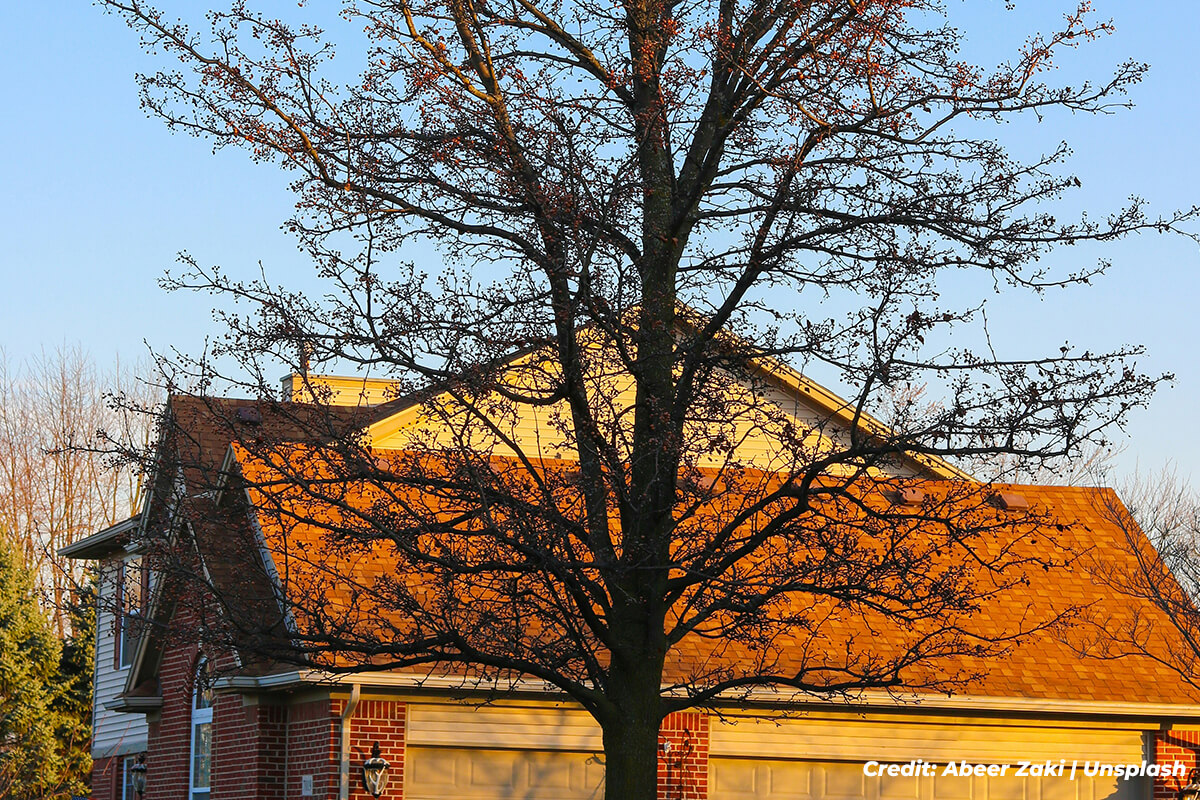
While evergreens provide constant cover, deciduous trees offer a dynamic beauty that changes with the seasons. They are a wonderful choice when privacy is primarily needed from spring through autumn. Their bare winter branches have their own stark beauty and have the added benefit of allowing precious winter sunlight to reach your windows and warm your home.
For tight spaces, several columnar deciduous trees perform beautifully. The Pyramidal English Oak (Quercus robur ‘Fastigiata’) offers a stately, majestic presence, growing into a tall, narrow column that is perfect for formal screening. Similarly, the Frans Fontaine Hornbeam (Carpinus betulus ‘Frans Fontaine’) is prized for its tidy, upright habit and its tolerance for heavy pruning, making it one of the best choices for a tall, formal hedge, often called a “hedge on stilts.” An interesting feature of hornbeams and beeches is marcescence (i.e the tendency to hold onto their dried, brown leaves throughout the winter), which provides a surprising amount of visual screening even after the autumn colours have faded. Another fantastic choice is the native Serviceberry (Amelanchier canadensis), which can be grown as a multi-stemmed large shrub or small tree. It provides a lovely, informal screen and delivers four seasons of interest: delicate white flowers in spring, edible berries in summer, brilliant orange and red foliage in the fall, and an elegant branch structure in winter.
—
From Planting to a Thriving Green Wall
Your chosen trees are an investment. Proper planting and consistent aftercare are the final, vital steps to ensure that investment grows into the beautiful, living wall you envision.
6. The Planting Process
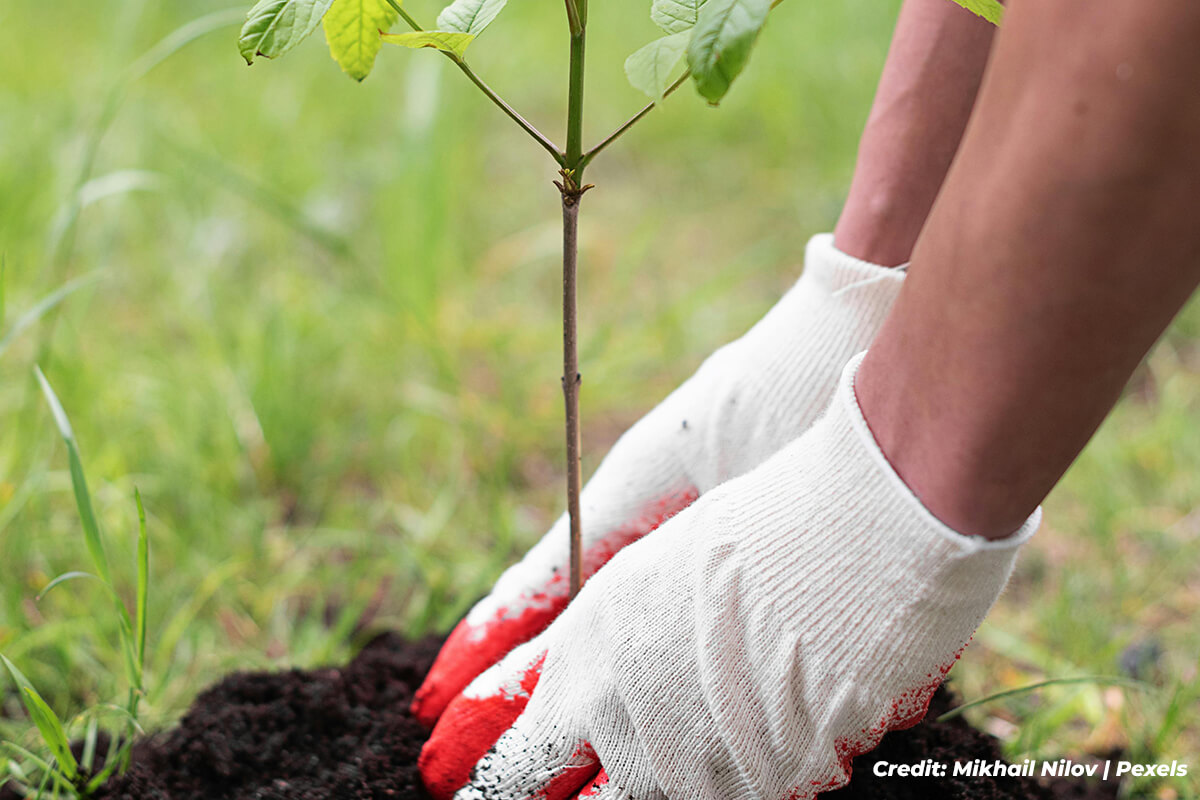
Planting your trees properly takes a little effort; it isn’t as simple as digging a big enough hole and putting the tree in. For one thing, timing matters. In most parts of Canada, early fall or early spring are the ideal times to plant new trees, allowing their root systems to become established before the stress of summer heat or deep winter cold. When you are ready to plant, the rule of thumb is to dig the hole two to three times wider than the tree’s root ball, but no deeper. Placing a tree too deep is a common and often fatal mistake. Gently set the tree in the middle of the hole, ensuring the top of the root ball is level with or slightly above the surrounding ground. Refill the hole and gently tamp it down to eliminate air pockets. The most critical part of planting is spacing. Research the mature width of your chosen species and space your trees accordingly. For a dense screen, you will typically plant them so their mature edges will just touch or slightly overlap. Planting too close together forces the trees to compete for light, water, and nutrients, which can lead to poor health and sparse growth on their lower branches.
7. Nurturing Your Green Wall
Once in the ground, your work shifts from installation to cultivation. Consistent watering is the single most important factor for a new tree’s survival. For the first two to three years, provide deep, infrequent waterings that encourage the roots to grow deep into the soil, rather than shallow, frequent sprinklings. Applying a layer of mulch (preferably 5 to 10-centimetres) around the tree (and of an organic material such as shredded bark) around the base of the trees is tremendously beneficial; take care not to let the mulch come too close to the trunk. That layer of mulch provides several benefits (including conserving soil moisture, regulating soil temperature, and suppressing weeds. As your trees grow, they will require pruning to encourage the dense habit you desire. For formal hedges like cedar or hornbeam, an annual shearing in late spring or early summer will maintain a crisp, tidy shape. For more natural screens, selective pruning to remove dead or crossing branches will be sufficient.
—
Planting a tree isn’t just good for making your home that much more appealing. With a little care and effort, you can plant yourself a row of privacy trees that offer ample utility and beauty for your property. Planting and caring for trees this way is a rewarding project that transforms your yard from a simple patch of land into a truly private, peaceful, and personal outdoor room.
When it comes to planting your own privacy trees, it pays to have the right supplier to ensure you get trees that provide that privacy and comfort. At Caledon Treeland, we provide a wide range of tree species to shade your home and create a discreet barrier to maintain your privacy. Call us now at (905) 880-1828 and make an appointment to check out our tree farm, and find the right tree for your property.