
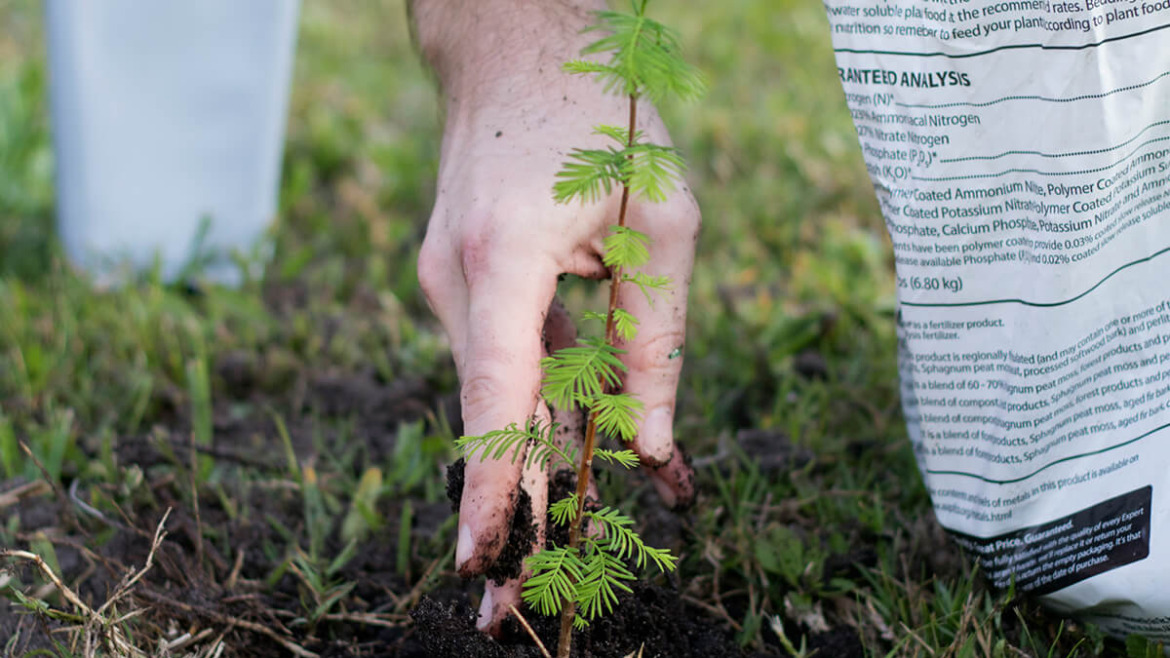
There’s a certain undeniable optimism that comes with planting a tree. Whether it’s adding a sugar maple for autumn colour or a spruce for privacy, setting your chosen tree into the ground can feel quite a bit like a gift to the future. However, for all your good intentions about the tree and what it can offer your home, it takes some care to avoid making some common planting mistakes. Many homeowners can find themselves dismayed when their new addition fails to thrive, dropping leaves prematurely or slowly withering away within the first year.
The truth is that trees are remarkably resilient, but they have specific biological requirements that, if ignored during planting, may doom them to failure. It is rarely a lack of care that kills a young tree, but rather, misguided care. To ensure your investment grows into a towering fixture of your neighbourhood, you must avoid these five common planting errors.
1. Planting Too Deep
Planting too deep is perhaps the single most common cause of tree mortality; knowing how to plant a tree properly requires an understanding of how deep is enough. Many homeowners dig a hole that is far too deep for their trees, assuming that a deeper hole means greater stability for the tree. However, when a tree is planted too deeply, the root flare (i.e. the area where the trunk widens and transitions into roots) gets buried underground.
Tree roots require oxygen to function. When the root flare is buried under several centimetres of heavy soil, that can rot the bark and suffocate the roots. Over time, the tree may grow girdling roots that wrap around the trunk, essentially strangling itself. A properly planted tree should look like it is gently sitting on the soil surface, not protruding from it like a telephone pole. As a rule of thumb, the root flare must be visible at grade level as a sign you’ve done the job correctly.
2. The “Bathtub” Effect
It is natural to want to give your tree the best start possible by filling the planting hole with rich potting soil, peat moss, or compost. However, amending the soil in the planting hole only creates a “bathtub” effect.
If the native soil around the hole is heavy clay and the hole is filled with fluffy, porous amendments, water will drain easily through the amended soil but stop when it hits the clay walls. This traps water in the hole, drowning the roots. Furthermore, roots often refuse to leave the nutrient-rich pocket to penetrate the harder native soil, resulting in shallow roots and an unstable tree. It’s more prudent instead to backfill with the soil you dug out, perhaps mixed with a very small amount of compost, which encourages the roots to expand outward immediately.
3. Mulch Volcanoes
There’s more to proper mulching than simply having the right tools to turn your leftover leaves into mulch. While mulch is vital for retaining moisture and suppressing weeds, but piling it high against the trunk (a practice known as volcano mulching) is far from the optimal way to provide it to your trees. Tree bark is designed to protect the wood from the elements, but is not adapted to constant moisture.
When mulch is piled against the trunk, it traps moisture against the bark, which invites fungal decay, rot, and insect infestation. It can also encourage secondary roots to grow into the mulch, which will dry out quickly in summer heat. Apply a layer of mulch about 5 to 10 centimetres thick in a donut shape around the base, keeping it at least 10 centimetres away from the trunk itself.
4. Improper Watering Regimes
Watering is a balancing act. New trees have limited root systems and cannot seek out moisture deep in the ground, which makes them susceptible to drought. However, well-meaning homeowners often overcorrect, watering daily until the soil is a swamp.
Too much water pushes oxygen out of the soil pore spaces, suffocating roots just as effectively as planting too deep. On the other hand, frequent light sprinkling encourages shallow root growth. The secret to safe winter watering is deep, infrequent watering. Depending on rainfall, a thorough soaking of 20 to 40 litres once or twice a week is usually sufficient to encourage deep root establishment.
5. Unnecessary Staking
Many people assume every new tree requires staking to grow straight. In reality, trees need movement to build strength. As the wind blows, the swaying motion stimulates the production of reaction wood, which thickens and strengthens the trunk.
Staking a tree too rigidly prevents this natural movement, resulting in a weak trunk that cannot support the canopy once the stakes are removed. As a rule, you only need to stake a tree if it is in a very high-wind area or if the root ball is unstable. If you must stake, ensure the ties are loose enough to allow the trunk to sway a few centimetres, and remove all supports after one year.
By avoiding these pitfalls, you can learn how to stop fighting against the tree’s biology and start working with it. A correctly planted tree requires less maintenance, establishes faster, and is far more likely to survive and then thrive on your property. And once that’s happened, you can start enjoying your tree as it provides colour, shade and privacy for years to come.
There’s no reason to let planting mistakes ruin your landscape. At Caledon Treeland we offer a wide selection of large shade and privacy trees that provide a little extra comfort and convenience for your home. Contact us at (905) 880-1828 and find the right for your property today.