Trees are a great investment for a homeowner, and for good reason. A tree boosts your curb appeal, provides shade, and offers essential privacy, and provides some colour and character to make a mark on your property. However, for many homeowners, trees can also become a source of unexpected and exorbitant costs. While trees are generally self-sustaining in the wild, the urban environment does require a degree of human intervention to maintain its health, appearance, and utility. Quite a few well-meaning homeowners often make critical errors in judgment or maintenance that can turn those beautiful, appealing trees into financial liabilities.
The difference between a thriving canopy and hazardous timber often comes down to knowledge, such as knowing when and how to prune your trees properly or which trees to avoid pruning in winter altogether. Ignoring the biological needs of a tree or attempting localized fixes without understanding the long-term consequences can lead to property damage, expensive removal fees, and decreased property value. By recognizing the most common pitfalls, you can protect your investment and avoid the heavy price tag associated with negligence.
Here are eight mistakes that frequently cost homeowners thousands of dollars, along with advice on how to avoid them.
1. Planting Without Forecasting Growth
The most expensive mistake often happens before the tree is even in the ground. It is easy to be charmed by a sapling at the garden centre, taking the time to consider its future height and size is crucial to avoiding damage and difficulty once the tree is fully grown. Planting a tree that might eventually grow directly under power lines, or placing a species with an aggressive root system too close your foundation, guarantees future conflict.
As the tree grows, it may heave driveways, invade sewage lines, or threaten the structural integrity of your home if its site isn’t chosen carefully from the start. The cost here is twofold: you will eventually have to pay for the tree’s complicated removal (which will incur additional costs if the the tree becomes entangled with infrastructure) as well as a costly repair bill for your home or hardscaping in case of any damage. Always research the ultimate height and spread of a species to ensure you choose a species that can actually fit in your space. Ensure you are planting the right tree in the right place, maintaining appropriate clearance from your home, your neighbour’s property line, and utility corridors.
2. Volcano Mulching
Mulching is always a good way to help your trees; so long as you do the job correctly, your trees can enjoy the many benefits mulching provides. Walk through many suburban neighbourhoods, and you will likely see trees with mulch piled high against the trunk, resembling a volcano. While this might look like proper mulching to some, it is actually one of the most detrimental things well-meaning homeowners can do to a tree.
Tree bark is designed to protect the trunk from the elements, but it is not adapted to be constantly moist. When mulch is piled against the bark, it traps moisture, causing the bark to rot and providing an entry point for disease, insects, and rodents. Furthermore, this practice can lead to “girdling roots,” where roots grow around the trunk and strangle the tree. The result is a slow decline that usually necessitates removal and replacement. To avoid this, spread mulch in a donut shape, keeping it at least 10 to 15 centimetres away from the base of the trunk.
3. Topping Trees to Reduce Height
Tree topping (i.e. the indiscriminate cutting of tree branches to stubs or to lateral branches that are not large enough to assume the terminal role) is perhaps the most harmful pruning practice known. Homeowners often request topping because they fear a tree has become too large. However, this practice actually ruins the tree’s natural structure, compromising its health and value to your curb appeal.
Biologically, topping sends a tree into shock. To ensure its own survival, the tree rapidly grows water sprouts as a result. These are weakly attached branches that grow very fast. These new limbs are prone to breaking during windstorms or heavy snowfall, creating a future danger you’ll need to deal with. Instead of reducing risk, topping increases liability and often kills the tree over time. If a tree is too large for its space, the correct solution is either crown reduction by a certified arborist or complete removal, not topping.
4. Neglecting Roots During Renovations
When planning a home addition, a new patio, or a widened driveway, homeowners rarely think about what is happening underground. Trees have a critical root zone that often extends well beyond the drip line (i.e. the outer edge of the canopy). Heavy machinery driving over this area compacts the soil, squeezing out the oxygen that roots need to survive. excavating or trenching through this zone severs major structural roots.
The damage from construction is rarely visible immediately. It often manifests three to five years later, when the tree suddenly declines or falls over because its anchor roots were cut. The cost of removing a large, dead tree from a backyard with limited access is significantly higher than the cost of installing protective fencing around the root zone before construction begins.
5. The DIY Pruning Gamble
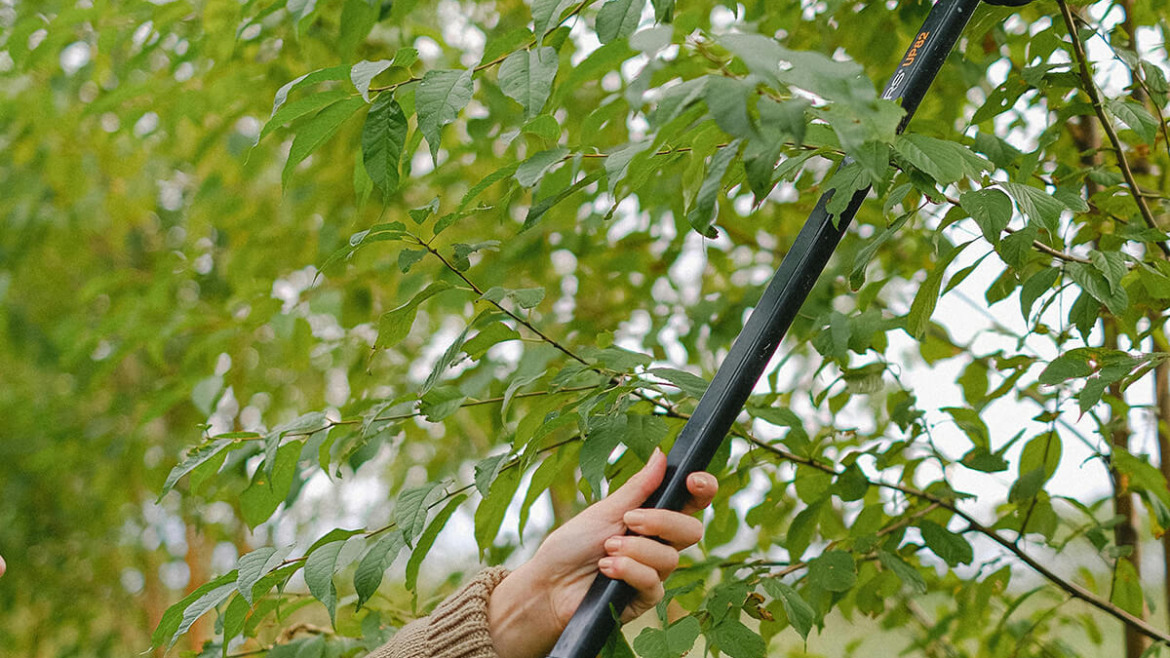
There is a distinct difference between trimming a hedge and pruning a mature maple or oak. Homeowners often attempt to save money by pruning large branches themselves, but this false economy can be costly. Improper cuts (such as flush cuts that remove the branch collar) prevent the tree from sealing the wound, leading to internal decay that weakens the trunk.
Beyond the health of the tree, the personal risk can be immense, even if you’ve familiarized yourself with the dos and don’ts of pruning your trees. Working at heights with chainsaws requires specialized gear and training. A falling limb can easily damage roofs, fences, or vehicles. In case of any damage or injury to the surrounding areas, the financial ramifications far outweigh the fee of hiring a professional. For any work requiring a ladder or a chainsaw, it is more prudent on every level to hire a professional.
6. Ignoring Early Signs of Infestation
Trees rarely die overnight. They usually signal distress months or years in advance through early leaf drop, discoloured foliage, sawdust at the base, or peeling bark. A common error is the “wait and see” approach. Homeowners often hope the tree will bounce back on its own.
By the time a tree looks undeniably dead, the window for treatment has usually closed. For example, issues like fungal infections or specific insect borers can often be managed if caught early. Once the tree is dead, it becomes brittle and hazardous, making removal more difficult and expensive. Regular visual inspections can save you the cost of removal by allowing for cheaper, preventative treatments.
7. Incorrect Watering Practices
Water is essential, but both overwatering and underwatering can be fatal. In an attempt to be helpful, homeowners may water their trees frequently but shallowly. This encourages roots to stay near the surface, leaving the tree vulnerable to drought and heat stress. Conversely, keeping the soil constantly saturated can suffocate roots, leading to root rot.
The cost here is the loss of the tree and the wasted water. Newly planted trees require deep, consistent watering to establish. Mature trees generally need water only during prolonged dry spells. The goal is to water deeply (aiming to saturate the top 30 centimetres of soil) to encourage deep root growth that anchors the tree and accesses moisture reserves during the dry season.
8. Hiring Uninsured Tree Services
Finally, one of the most devastating financial mistakes is hiring a “person with a truck” rather than a certified, insured company. Tree work is a high-risk job. If an uninsured worker drops a limb on your roof, or worse, gets injured on your property, you as the homeowner could be held liable for the damages and medical costs.
Always ask for proof of liability insurance and Workers’ Compensation coverage. While a certified arborist might charge a higher hourly rate than an odd-job labourer, it’s more than worth it. Not only are you paying for quality service from a professional who knows their business, their insurance also protects your financial future. The little funds you save on the initial quote is not worth the risk of a costly repair bill or other consequences should the attempt to save on costs fail.
Your property’s trees are as valuable as they are beautiful, and so require a proportionate level of care to maintain properly. As extreme weather becomes more common, proper tree care in the face of those shifting weather patterns becomes all the more important. The costs associated with fixing any unintentional tree care mistakes are always higher than handling the cost of proper care in the first place.
By respecting the biology of the tree and recognizing the limits of DIY maintenance, you can ensure your trees remain valuable assets instead of hazards. When in doubt, the most cost-effective move is usually to consult a professional before you cut, dig, or plant. Not only is it a way to save money, but it’s an excellent step to looking after your trees and ensuring they stay healthy, beautiful, and vibrant.
Ready to enhance your property with the right shade and privacy tree? Caledon Treeland is ready and waiting to lend a hand. We offer a wide selection of large, mature shade and privacy trees to beautify your home and make it all the more comfortable for you. Call us now at (905) 880-1828 to schedule your visit to our tree farm!